

Top 20 Business Loan Companies in the United States 2026
September 29, 2026
Top 20 Personal Loan Companies in the United States 2026
October 1, 2026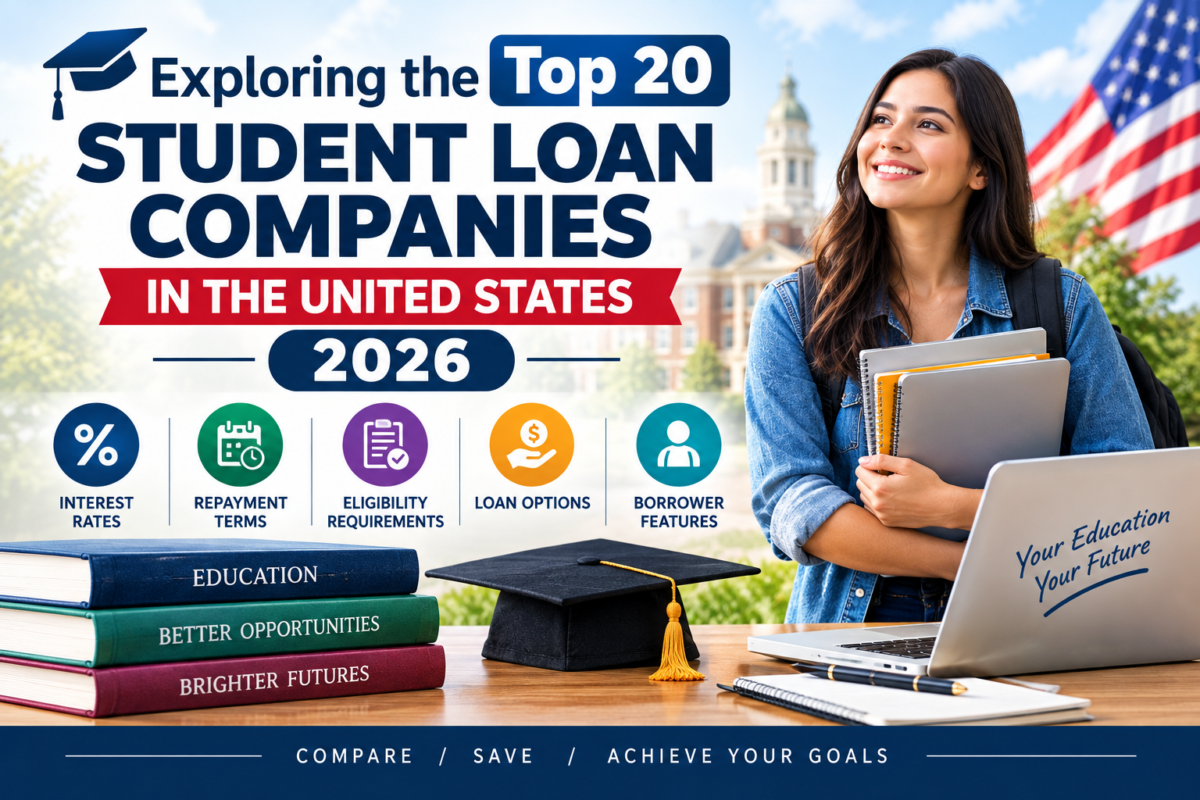
Introduction to Student Loans
Student loans play a crucial role in the educational landscape of the United States, serving as a primary source of financial assistance for millions of students pursuing higher education. With the rising cost of tuition and associated fees, understanding the various types of student loans is essential for prospective borrowers. In this section, we explore the significance of student loans and provide insights into their categories and the overall student debt landscape.
There are two main types of student loans available to borrowers: federal and private loans. Federal student loans are funded by the government and typically offer lower interest rates, more flexible repayment options, and various deferment options. These loans are designed to make higher education more accessible to all students, regardless of their financial situation. On the other hand, private student loans are offered by banks, credit unions, and other financial institutions, which may have more stringent requirements and higher interest rates. Understanding the differences between these types of loans is important for borrowers to make informed decisions.
According to recent statistics, the student loan debt crisis has reached alarming proportions, with approximately 45 million borrowers in the United States collectively owing over $1.6 trillion. This staggering figure highlights the importance of choosing the right financing route, especially when considering the top 20 student loan companies in the United States. These companies provide various loan products aimed at helping students afford their education. As more individuals scramble to secure funding, the implications of student debt become more pronounced, affecting financial independence and economic mobility long after graduation.
In this blog, we will delve deeper into the specific companies leading the student loan market and the options they provide to borrowers. Whether you are a current student or a new graduate, understanding the dynamics of student loans will empower you to navigate the financial challenges associated with education.
Criteria for Evaluating Student Loan Companies
When determining which of the top 20 student loan companies in the United States to select for financing education, several critical factors come into play. Understanding these criteria can aid borrowers in making informed decisions tailored to their financial situations.
One of the foremost considerations is the interest rates offered by different lenders. Lower interest rates can significantly reduce the total amount paid over the life of the loan, thus making it essential for borrowers to compare rates thoroughly. Additionally, fixed versus variable interest rates should be evaluated. Fixed rates provide predictability in monthly payments, whereas variable rates may start lower but can increase over time.
Another critical factor is the variety of repayment options available. Many borrowers prefer flexibility in how they repay their loans, including deferred repayment plans, income-driven repayment strategies, and loan forgiveness programs. Companies that offer multiple repayment avenues allow borrowers to choose a plan that best fits their financial circumstances.
Customer service is equally important in the evaluation process. Engaging with a loan company that provides responsive and helpful customer support can enhance the borrowing experience. Prospective borrowers should seek reviews or ratings of lenders to gauge their reputation regarding customer service responsiveness.
Lastly, borrower benefits should not be overlooked. Some companies in the top 20 student loan companies in the United States offer incentives such as interest rate reductions for automatic payments, loyalty discounts, or opportunities for deferment in times of financial hardship. Evaluating these benefits can make a substantial difference in the overall loan experience.
By carefully assessing these criteria—interest rates, repayment options, customer service, and additional borrower benefits—individuals can more effectively navigate the landscape of student loan companies and find a provider that meets their needs.
Top 20 Student Loan Companies: A Comprehensive List
When seeking financial assistance for education, it is crucial to explore the options available from different lenders. In this comprehensive overview, we will examine the top 20 student loan companies in the United States. These companies have been recognized for their reputable offerings, customer service, and market presence, making them key players in the student loan sector.
1. Sallie Mae – A well-established name in the industry, Sallie Mae provides a variety of federal and private loan options, catering to both undergraduate and graduate students.
2. Navient – Known for servicing a large number of federal student loans, Navient plays a significant role in providing resources for borrowers to manage their repayments.
3. Discover Student Loans – Acclaimed for its customer service, Discover offers competitive interest rates and unique rewards programs for timely payments.
4. SoFi – Offering personal loans and student refinancing options, SoFi stands out for its community-building approach and member benefits.
5. Citizens Bank – Citizens Bank provides a range of student loan options, including both undergraduate and graduate loans, along with flexible repayment terms.
6. College Ave – This lender specializes in student loans and provides a streamlined application process along with personalized loan options.
7. Earnest – Renowned for its innovative approach, Earnest offers customizable loans that empower borrowers to select repayment plans suitable for their financial situation.
8. Purefy – Purefy focuses on student loan refinancing, helping borrowers to lower their rates and simplify their payment processes.
9. Upstart – Utilizing advanced technology, Upstart offers personal loans for education and is known for its quick approval times.
10. LendKey – Providing a network of community banks and credit unions, LendKey helps facilitate competitive student loans and refinancing options.
11. Chase – While primarily a banking institution, Chase offers student loans and has robust online resources for borrowers.
12. CommonBond – A significant player in student loan refinancing, CommonBond also emphasizes social responsibility through its initiatives.
13. Laurel Road – This lender specializes in refinancing for medical, dental, and graduate students, offering tailored loan products.
14. Aspect – Focuses on providing personal loans for education with competitive fixed rates, appealing to a broad range of borrowers.
15. Citibank – Citibank offers flexible student loans with comprehensive support and resources for managing educational expenses.
16. SunTrust – Known for their commitment to the education sector, SunTrust provides a variety of student funding solutions tailored to customers’ needs.
17. Federal Student Aid – As part of the U.S. Department of Education, this organization offers federal loan options with various repayment plans.
18. Bank of America – Offering both federal and private student loans, Bank of America provides extensive support systems for borrowers.
19. PNC Bank – With a focus on education financing, PNC Bank offers a variety of student loan options along with advisory services.
20. Wells Fargo – A major player in the student loan landscape, Wells Fargo provides diverse loan products suitable for both undergraduate and graduate students.
These top 20 student loan companies in the United States stand out for their unique offerings and customer-centric approaches. Understanding the nuances of each lender can significantly assist borrowers in making informed loan choices tailored to their educational financing needs.
Federal Student Loan Programs
In the United States, federal student loan programs play a crucial role in making higher education accessible to students across various financial backgrounds. The federal government offers several types of loans, primarily designed to assist students in funding their educational pursuits. Understanding these options is essential for students looking to navigate the landscape of financing their education.
One of the most prevalent types of federal student loans is the Direct Subsidized Loan, available to undergraduate students who demonstrate financial need. The key feature of this loan is that the government pays the interest while the borrower is enrolled at least half-time in college. This benefit can lead to significant savings over time, making it an attractive option within the top 20 student loan companies in the United States.
In addition, there is the Direct Unsubsidized Loan, which is available to both undergraduate and graduate students regardless of financial need. Unlike the subsidized option, interest begins accruing immediately upon disbursement. However, it does provide students with the flexibility to borrow larger amounts if necessary. This type of loan is essential for many students who may find themselves needing additional financial assistance during their studies.
When applying for federal student loans, students must complete the Free Application for Federal Student Aid (FAFSA). This form collects financial information to determine eligibility for various federal aid programs, including grants, work-study, and loans. The FAFSA application process typically opens on October 1 each year, allowing students to plan their financial aid strategy well in advance of their intended enrollment.
Furthermore, eligibility requirements for federal student loans include being a U.S. citizen or eligible non-citizen, having a valid Social Security number, and being enrolled or accepted for enrollment at an eligible institution. Students must also maintain satisfactory academic progress in their courses to continue receiving federal funding.
Private Student Loan Options
Private student loans have become an increasingly popular option for students seeking financial assistance for their education. Unlike federal loans, which are funded by the government, private student loans are issued by private lenders, including banks, credit unions, and other financial institutions. This section will delve into the different types of private student loans available, the key differences from federal loans, and who might benefit from considering them.
Private student loans typically fall into two main categories: fixed-rate loans and variable-rate loans. Fixed-rate loans maintain the same interest rate throughout the loan term, which can provide predictability in monthly payments. On the other hand, variable-rate loans feature interest rates that can fluctuate based on market conditions, potentially resulting in lower initial rates but also increasing the burden over time if rates rise.
One of the primary distinctions between private and federal student loans lies in the underwriting process. Private lenders often require a good credit score or a co-signer with strong credit history, which can make it challenging for students with limited credit backgrounds to qualify. Federal loans, in contrast, do not typically require a credit check for the majority of borrowers.
Another key difference is that federal student loans provide various benefits, such as income-driven repayment plans and deferment options, which are usually not available with private loans. Therefore, students who are considering private loans should assess their financial situation carefully, taking into account their current credit standing and potential future income.
Private student loans may be particularly appealing for those attending higher-cost institutions or pursuing professional degrees, where educational funding needs may exceed the limits of federal loans. However, it is essential for borrowers to thoroughly research and compare the top 20 student loan companies in the United States to ensure they choose the most suitable option for their needs.
Interest Rates and Loan Terms Explained
Understanding how interest rates are determined for student loans is crucial for prospective borrowers. Typically, the interest rate on a student loan can vary based on several factors, including the type of loan, the lender, and the financial profile of the borrower. Government-sponsored loans often have fixed interest rates that are lower than those of private loans, making them a preferred choice for many students. Variable interest rates may also be offered by some lenders, which can fluctuate over time based on market conditions, presenting an inherent risk to borrowers.
Loan terms, which refer to the duration over which the loan must be repaid, also play a significant role in the cost of borrowing. Common terms for student loans range from 10 to 30 years, and the length of the term can greatly influence the total amount paid over the life of the loan. Shorter loan terms typically result in higher monthly payments but lower total interest paid, whereas longer terms may provide lower monthly payments but increase the overall cost due to extended interest accumulation.
In addition to the base interest rates and loan terms, borrowers should consider other fees and costs that could be associated with their loans. Certain lenders offer options such as deferment or forbearance, allowing borrowers to pause their payments in specific circumstances, but these can also affect the total amount due over time. It’s essential for students to carefully review the specifics provided by the top 20 student loan companies in the United States, as understanding these nuances can help in making informed decisions regarding student financial obligations.
Understanding Repayment Plans
Repayment plans for student loans are crucial for borrowers, as they significantly impact financial stability post-graduation. Among the top 20 student loan companies in the United States, a variety of repayment options are available, catering to different financial situations and needs.
The **standard repayment plan** is the most common, typically lasting ten years. With this plan, borrowers pay a fixed amount each month, making it easier to budget and ensuring loans are paid off relatively quickly. This option is ideal for those who can afford higher monthly payments, aiming to reduce interest accumulation over time.
In contrast, the **graduated repayment plan** starts with lower monthly payments that gradually increase every two years. This plan is designed for borrowers expecting future salary increases. It allows for initial payment flexibility while eventually aligning payments more closely with increased earning potential.
For those facing financial difficulties, **income-driven repayment plans** offer a reasonable alternative. These plans adjust monthly payments based on income and family size, making it easier for borrowers who may be struggling financially to manage their obligations. Plans such as Income-Based Repayment (IBR) or Pay As You Earn (PAYE) can extend the repayment term up to 25 years, with the possibility of forgiveness after meeting specific criteria.
Choosing the right repayment plan among the *top 20 student loan companies in the United States* is essential. Borrowers should assess their financial circumstances, including current and projected income and expenses, to select the option that best fits their needs. Each plan has distinct advantages and drawbacks, so thorough research and assessment are critical for making informed decisions.
Ultimately, understanding these repayment plans empowers borrowers to navigate their financial future effectively, allowing for informed choices that promote long-term stability. By evaluating different options offered by leading lenders, borrowers can tailor their repayment strategy to optimize their financial outcomes.
Resources for Student Loan Borrowers
For individuals navigating the complex landscape of student loans, having access to appropriate resources is crucial. This section aims to highlight valuable tools and websites dedicated to supporting borrowers effectively manage their educational debt. One fundamental resource is the loan calculator, which can aid users in estimating monthly payments based on their specific loan amounts, interest rates, and repayment terms. Utilizing a student loan calculator can alleviate some of the confusion surrounding repayment options, helping borrowers to formulate a sustainable plan for managing their loans.
In addition to calculators, the federal government offers numerous online resources through platforms such as the Federal Student Aid website. This site contains comprehensive information on federal loans, grants, and repayment programs. Borrowers can also access various types of financial aid, including income-driven repayment plans and loan forgiveness options, which may alleviate their financial burdens. Understanding these options is essential, as the top 20 student loan companies in the United States may offer different terms and conditions, and having a grasp on federal guidelines can help inform borrowers’ decisions.
Another significant aspect of managing student loans is looking into debt management strategies. Various non-profit organizations provide counseling services designed to help borrowers understand their financial responsibilities better. These services may offer budgeting workshops and personalized loan management plans. Moreover, engaging with such resources is beneficial for enhancing one’s knowledge about effective repayment strategies that differ among the top 20 student loan companies in the United States.
Overall, borrowers are encouraged to utilize these resources, such as calculators, official government websites, and nonprofit counseling services, to enhance their understanding and management of student loans. By leveraging these tools, borrowers can navigate their financial commitments more effectively and work towards a secure financial future.
Conclusion and Future of Student Loans
As discussed throughout this article, the landscape of student loans in the United States is shaped by various factors, including financial institutions, government policies, and the individual circumstances of borrowers. The top 20 student loan companies in the United States have demonstrated a range of offerings, from federal loans to private financing options, catering to the diverse needs of students across the nation. Key players in this field are continuously evolving, adapting to changing regulations and the economic climate, which impacts borrowing capabilities.
The current trends indicate a growing awareness among borrowers regarding the importance of assessing their loan options carefully. With the rise of online platforms and tools designed to facilitate informed decision-making, students and their families are better equipped to navigate the complexities of the student loan market. Moreover, there has been a noticeable shift towards more competitive interest rates and flexible repayment terms as companies strive to attract new clients in a crowded marketplace.
Looking ahead, the future of student loans in the United States may involve significant changes driven by technological advancements and regulatory reforms. The increase in fintech solutions is likely to streamline the borrowing process, offering personalized financing options based on individual credit profiles and educational paths. Moreover, the potential for legislative changes could reshape federal student aid programs, impacting the availability and terms of both federal and private loans.
In conclusion, the student loan market is poised for transformation, reflecting the evolving needs of borrowers and the economic realities of an increasingly competitive environment. As we look toward the future, it is essential for current and prospective students to remain informed about the top 20 student loan companies in the United States and the innovative solutions they provide. Understanding these dynamics will be crucial for making sound financial decisions in pursuit of higher education.
Frequently Asked Questions About the Top 20 Student Loan Companies in the United States
1. What are student loan companies?
Student loan companies can include private lenders, banks, credit unions, and organizations that provide or service education loans. Federal student loans, by contrast, are administered through federal programs offered by the U.S. Department of Education.
2. What should I consider when comparing student loan companies?
Compare interest rates, fixed or variable rates, repayment terms, fees, eligibility requirements, cosigner policies, deferment or forbearance options, and available borrower protections.
3. What is the difference between federal and private student loans?
Federal student loans are provided through federal programs and generally offer protections and repayment options that private loans may not provide. Private student loans are offered by private lenders, with terms determined by the lender.
4. Should I apply for federal student loans before private student loans?
Federal Student Aid and the CFPB generally recommend considering available federal student aid before private student loans because federal loans typically provide more flexible repayment and borrower protections.
5. What types of federal student loans are available?
Federal Direct Loans include Direct Subsidized Loans, Direct Unsubsidized Loans, Direct PLUS Loans, and Direct Consolidation Loans.
6. Can I get a private student loan without a cosigner?
Some private lenders may approve borrowers without a cosigner, but requirements vary. A cosigner may improve eligibility or the interest rate for some applicants.
7. What credit score do I need for a private student loan?
There is no single credit-score requirement for all private student lenders. Approval and pricing may depend on credit history, income, debt, enrollment status, and whether a qualified cosigner is used.
8. Are student loan interest rates fixed or variable?
Depending on the loan, interest rates can be fixed or variable. Federal student loans generally have fixed rates, while private lenders may offer either fixed or variable rates.
9. Can I refinance my student loans?
Private student loans may be refinanced through a private lender if you meet its eligibility requirements. Federal loans can be consolidated through the federal Direct Consolidation Loan program, while refinancing a federal loan with a private lender can cause you to lose certain federal benefits.
10. Can I refinance federal student loans with a private lender?
Yes, private lenders may offer refinancing for federal student loans. However, refinancing into a private loan removes the loan from the federal student-loan system and can result in losing federal protections and benefits.
11. How long do I have to repay a student loan?
Repayment periods vary by loan program and lender. Private lenders establish their own repayment terms, while federal loans have specific repayment plans and requirements.
12. Can student loans be deferred while I am in school?
Some federal and private student loans allow payments to be postponed while the borrower is enrolled in school, but the rules differ. Private borrowers should check their specific loan agreement.
13. What happens if I cannot afford my student loan payments?
Your options depend on whether the loan is federal or private. Federal borrowers may have access to repayment plans or certain forms of temporary payment relief, while private options depend on the lender and loan agreement.
14. Can student loans be forgiven?
Certain federal student loans may qualify for specific forgiveness or discharge programs, depending on the borrower’s circumstances and eligibility. Private student loans generally do not offer the same federal forgiveness programs.
15. Can I use student loans for living expenses?
Depending on the loan and school’s cost-of-attendance calculation, education loans may help cover eligible education-related expenses beyond tuition. Students should review their financial-aid offer and school policies.
16. Do private student loans require a credit check?
Private lenders commonly evaluate creditworthiness and may consider the borrower’s credit history and income. Some borrowers may need a cosigner to qualify.
17. How can I compare offers from different student loan companies?
Compare the annual percentage rate, interest-rate type, fees, repayment period, monthly payment, total repayment amount, cosigner requirements, and available hardship options. Don’t compare lenders solely on the advertised interest rate.
18. What is a student loan servicer?
A loan servicer handles tasks such as billing, payment processing, and account management. Federal Student Aid uses loan servicers to manage many federal student loans.
19. Are the “Top 20 Student Loan Companies” officially ranked by the U.S. government?
No. A “Top 20” list published by a website is generally an editorial comparison rather than an official government ranking. Students should independently review each lender’s current terms, eligibility requirements, and borrower protections.
20. What should I check before choosing a student loan company?
Review the complete loan agreement, interest rate, fees, repayment period, monthly payment, cosigner provisions, deferment or hardship options, and consequences of refinancing or missed payments.
Read More:



1 Comment
[…] Exploring the top 20 Student Loan Companies in the United States 2026 […]