
Motorcycle Loan Pre-Approval With No Credit Check: What You Need to Know
October 18, 2026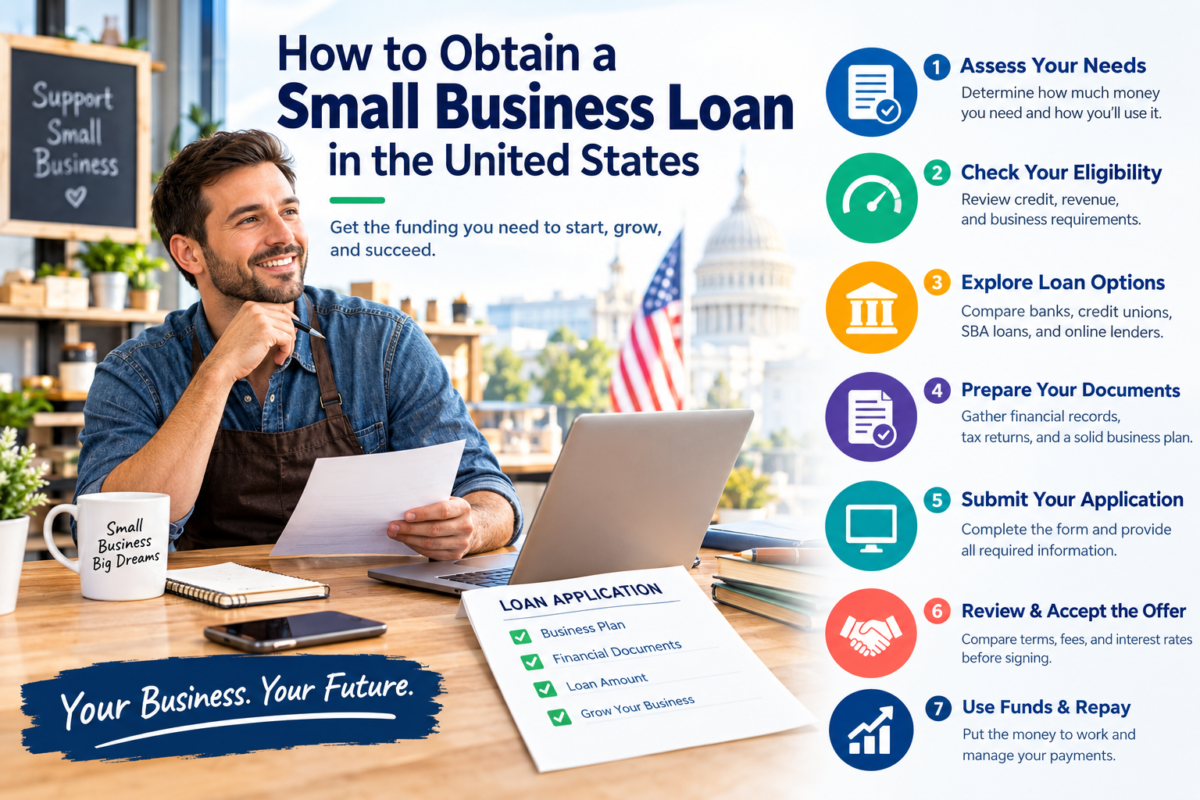
Getting a small business loan can help entrepreneurs start a company, purchase equipment, hire employees, manage cash flow, or expand into new markets. However, the application process can feel complicated, especially for first-time business owners who are unsure which lender to approach, what documents to prepare, or how to qualify for financing.
If you are searching for how to obtain a small business loan, the most important steps are to determine how much funding you need, compare suitable loan programs, review your credit and financial records, prepare a strong application, and choose repayment terms your business can afford.
In the United States, small business owners can explore traditional bank loans, credit union financing, loans backed by the U.S. Small Business Administration (SBA), online business loans, microloans, and business lines of credit. Each option has different eligibility requirements, interest rates, fees, and repayment structures.
This guide explains the process step by step, helping startups and established businesses understand their financing options and make informed borrowing decisions.
1. Understand What a Small Business Loan Is
A small business loan is financing provided to a business by a bank, credit union, online lender, nonprofit organization, or another eligible financing provider. The borrower receives funds and agrees to repay the principal, interest, and applicable fees according to the loan agreement.
Businesses commonly use loans for purposes such as:
- Starting a new business.
- Purchasing inventory and supplies.
- Buying machinery, computers, or commercial equipment.
- Hiring and training employees.
- Renovating a commercial property.
- Managing seasonal cash flow shortages.
- Expanding operations into another location.
- Purchasing an existing business.
- Refinancing eligible business debt.
For example, suppose a small retail business needs $35,000 to purchase inventory and upgrade its point-of-sale system before a busy sales season. A business loan could provide the money upfront, allowing the owner to purchase the necessary supplies and repay the lender over an agreed period.
However, borrowing is not always the best solution. Before applying, estimate how the funds will improve business performance and whether the expected cash flow will support the monthly payments.
2. Determine How Much Money Your Business Needs
Before approaching a lender, calculate the amount you need and identify how you will use it. Borrowing too little can leave a project unfinished, while borrowing too much can increase interest expenses and repayment pressure.
Start by preparing a detailed funding estimate.
For example, a small business expansion might require:
| Expense | Estimated amount |
|---|---|
| Equipment purchases | $12,000 |
| Initial inventory | $8,000 |
| Marketing and advertising | $3,000 |
| Working capital | $7,000 |
| Total funding required | $30,000 |
These figures are illustrative. Your actual costs will depend on your industry, location, suppliers, and business plans.
Once you estimate the total, determine whether you can contribute some funds yourself. A reasonable owner contribution may reduce the amount you need to borrow, although lender requirements vary.
Also prepare a cash flow forecast. Include expected revenue, operating expenses, existing debt payments, taxes, and the proposed loan payment. A lender will want evidence that the business can reasonably repay the financing.
Practical tip: Borrow based on a documented business need rather than the maximum amount a lender offers.
3. Compare the Different Types of Small Business Loans
Choosing the right financing product is an important part of the application process. Different loans suit different business needs.
SBA loans
The U.S. Small Business Administration (SBA) supports several loan programs through participating lenders. In most cases, the lender makes the loan, while the SBA guarantees a portion under the applicable program.
SBA-backed financing may offer competitive terms and repayment structures for eligible businesses. However, approval is not automatic, and borrowers must meet program and lender requirements.
The SBA 7(a) loan program is its primary general-purpose loan program. Eligible uses include working capital, equipment, real estate, certain debt refinancing, and business acquisitions. The maximum 7(a) loan amount is $5 million.
SBA microloans
Microloans are designed for smaller funding needs. Through nonprofit intermediary lenders, eligible businesses may obtain loans of up to $50,000.
These loans can help cover working capital, inventory, supplies, furniture, fixtures, and equipment. They generally cannot be used to purchase real estate or pay existing debt. Terms and rates are set by the intermediary within the program’s rules.
Traditional bank loans
Banks offer term loans and other financing products to qualifying businesses. They may be suitable for established companies with documented revenue, sound financial records, and a demonstrated ability to repay.
Banks typically evaluate business performance, credit history, cash flow, collateral where applicable, and the purpose of the loan. Requirements differ by institution.
Credit union business loans
Some credit unions provide business financing to eligible members. They may offer term loans, equipment financing, or lines of credit, depending on their business lending programs.
Ask about membership eligibility, fees, loan limits, and repayment requirements before applying.
Online business loans
Online lenders may provide a convenient digital application process and faster decisions for certain products. Some offer term loans, lines of credit, or short-term financing.
However, convenience does not necessarily mean lower cost. Compare the annual percentage rate (APR), total repayment amount, payment frequency, origination fees, and prepayment terms. Be especially careful with financing that requires frequent automatic withdrawals.
Business lines of credit
A business line of credit provides access to a borrowing limit that can be used as needed, subject to the agreement. Interest is generally charged on the amount borrowed, although fees and minimum charges may also apply.
This option can help businesses manage temporary cash flow gaps, seasonal inventory purchases, or unexpected operating expenses.
Equipment financing
Equipment financing is intended to fund eligible business equipment purchases. The equipment may serve as collateral, depending on the agreement.
It can be useful for businesses purchasing vehicles, manufacturing equipment, restaurant appliances, or specialized tools.
4. Check Whether Your Business Meets the Eligibility Requirements
Eligibility varies by lender and loan program. Before submitting an application, review the main factors that may affect your approval.
Business operating history
Established businesses may have an advantage because they can provide financial statements, tax returns, and a record of revenue. However, startups may still qualify for certain financing options, depending on the lender and the strength of their business plan.
Personal and business credit
Lenders may review personal credit, business credit, or both. Credit history can influence eligibility, interest rates, loan amounts, and collateral requirements.
Review your credit reports for errors before applying. If your credit history is limited or contains negative information, ask prospective lenders about their minimum requirements and consider whether improving your credit before borrowing would be beneficial.
Revenue and cash flow
Lenders often examine whether your business generates enough cash to meet existing obligations and the proposed loan payments.
Strong sales alone may not be sufficient if expenses are high or revenue fluctuates significantly. Prepare realistic projections and explain any seasonal patterns.
Business plan
A business plan is especially important for startups and businesses seeking financing for expansion. It should describe your products or services, target customers, competitors, marketing approach, operating expenses, funding requirements, and financial projections.
Collateral and personal guarantees
Some lenders require collateral, such as equipment, inventory, or other assets. Some also require a personal guarantee from business owners.
A personal guarantee may make the guarantor personally responsible for covered unpaid obligations under the agreement. Read the terms carefully before signing.
SBA loan eligibility also depends on factors such as the business’s size, location, activities, creditworthiness, and ability to repay. Consult the specific program requirements rather than assuming all businesses qualify.
5. Prepare the Documents Needed for a Small Business Loan
Preparing your paperwork before applying can make the process more organized and help lenders evaluate your business.
Although requirements vary, many lenders may request the following documents:
- Government-issued identification for business owners.
- Business registration documents and ownership information.
- Employer Identification Number (EIN), where applicable.
- Personal and business tax returns.
- Business bank statements.
- Profit and loss statements.
- Balance sheets.
- Cash flow statements or financial projections.
- A business plan explaining how the funds will be used.
- Existing loan statements and details of outstanding debts.
- Equipment quotes, purchase orders, or other evidence of planned expenses.
- Collateral documentation, if required.
Startups may have limited financial history, so lenders may place greater emphasis on the owner’s credit profile, personal financial information, startup budget, industry experience, and revenue projections.
Organize your documents into clearly labeled digital files. Ensure the figures are consistent across your application, tax returns, bank statements, and financial projections.
If your business has experienced a recent decline in revenue, prepare an honest explanation supported by evidence of how you plan to improve cash flow. Accurate, complete information is preferable to optimistic figures that cannot be substantiated.
6. Follow These Steps to Apply for a Small Business Loan
Once you understand your funding needs and eligibility, you can begin the application process.
Step 1: Calculate your funding needs
Identify the amount required, how the money will be spent, and how the investment is expected to support your business.
Step 2: Review your financial position
Check credit reports, revenue records, existing debt, and projected cash flow. Resolve documentation issues before applying.
Step 3: Choose suitable lenders
Compare banks, credit unions, online lenders, and SBA-participating lenders based on the type and amount of funding you need.
Step 4: Submit the application
Complete the lender’s application, provide the requested records, and explain the intended use of the funds.
Step 5: Respond to underwriting requests
The lender may verify revenue, review credit, request additional documents, evaluate collateral, and assess your ability to repay.
Step 6: Review the loan agreement
Check the APR, repayment schedule, fees, collateral, guarantees, default provisions, and any prepayment restrictions before signing.
Step 7: Receive and manage the funds
Once the loan closes and funds are disbursed, use the money according to the agreement and keep records of spending and repayments.
For eligible SBA-backed financing, the SBA’s Lender Match service can help you connect with interested participating lenders. It is a matching service, not a loan application or a guarantee of approval.
7. How to Get a Small Business Loan for a Startup
Obtaining financing for a new business can be more challenging because startups may not have established revenue, business credit, or a repayment history.
However, having a new business does not automatically disqualify you from all loan programs.
To improve your chances:
Develop a realistic business plan. Explain what your business sells, who your customers are, how you will generate revenue, and why the funding is necessary.
Prepare financial projections. Estimate startup costs, monthly sales, operating expenses, and cash flow. Use reasonable assumptions and explain how you developed them.
Demonstrate relevant experience. Experience in your industry can help show that you understand the market and the challenges of operating the business.
Consider smaller funding options. Depending on eligibility, a microloan or community-based lending program may be more suitable than a large conventional loan.
Explore owner contributions and other funding sources. Personal savings, eligible business grants, or investments may reduce the amount you need to borrow. Grants and other programs have specific eligibility rules and are not guaranteed sources of funding.
If you are opening a restaurant, for example, a lender may want to review your lease, equipment costs, licenses, menu pricing, startup budget, and projected sales. A detailed plan can help demonstrate how you expect the business to operate and repay the loan.
8. Can You Get a Small Business Loan With Bad Credit?
It may be possible, but bad credit can limit your options or result in higher borrowing costs.
Lenders may consider more than a credit score, including business revenue, time in operation, bank account activity, collateral, outstanding debts, and the owner’s ability to repay.
If your credit is poor, consider these steps:
- Check your credit reports for inaccurate information.
- Reduce outstanding debt where financially practical.
- Avoid submitting numerous applications without understanding lender requirements.
- Prepare clear financial statements showing your current business position.
- Consider a smaller loan amount if it is sufficient for your needs.
- Explore reputable nonprofit microlenders or community-based programs.
- Ask whether the lender evaluates applicants with your specific credit profile.
Be cautious about lenders promising guaranteed approval regardless of credit, revenue, or repayment ability. Watch for unusually high fees, unclear contracts, pressure to sign immediately, and requests for upfront payments to guarantee a loan.
Do not misrepresent your income or business performance. Accurate financial information is essential when applying for credit.
9. How Much Does a Small Business Loan Cost?
The cost of borrowing depends on the lender, loan type, interest rate, repayment period, fees, and your business’s creditworthiness.
When comparing offers, review the following:
- Interest rate: The cost charged for borrowing the principal.
- Annual percentage rate (APR): A broader measure of annualized borrowing cost that may include certain fees.
- Origination fees: Charges for processing or arranging the loan.
- Repayment term: The time allowed to repay the balance.
- Payment frequency: Payments may be monthly, weekly, or on another schedule.
- Collateral requirements: Assets may be pledged to secure the loan.
- Personal guarantee: The owner may accept personal responsibility under specified circumstances.
- Prepayment terms: Some agreements may impose charges or other conditions for early repayment.
Consider an illustrative loan of $30,000 with a 12% fixed annual interest rate and a three-year repayment term. Assuming a standard monthly amortization schedule, the payment would be approximately $996 per month, excluding fees.
This is an example, not a current market quote. Your actual payment could be different depending on the rate, fees, repayment structure, and loan terms.
Before signing, calculate the total repayment amount and compare it with the cash flow your business can reasonably generate. A loan with a low advertised rate may still be expensive if it includes substantial fees or unusually frequent payments.
10. How to Choose the Best Small Business Loan Lender
Choosing a lender requires comparing more than the amount of money offered. The best option is one that fits your business’s financial needs, eligibility, and ability to repay.
Consider these factors before making a decision:
| Factor | What to check |
|---|---|
| Interest rate and APR | Compare the full borrowing cost, not just the advertised rate. |
| Repayment terms | Check monthly payments, loan duration, and payment frequency. |
| Eligibility | Review credit, revenue, time in business, and documentation requirements. |
| Funding timeline | Ask how long underwriting and disbursement usually take. |
| Collateral | Determine whether business or personal assets are required. |
| Fees | Review origination, late-payment, and other applicable charges. |
| Customer support | Check how the lender handles questions and servicing issues. |
Get written offers from multiple suitable lenders when possible. Compare them using the same loan amount and repayment assumptions.
Do not choose a lender solely because it advertises fast approval. Make sure the repayment schedule is manageable and the contract clearly explains your obligations.
11. Common Reasons Small Business Loan Applications Are Rejected
Understanding why applications are denied can help you prepare more effectively.
Insufficient cash flow: The lender may believe your business cannot comfortably meet the proposed payments.
Poor or limited credit history: A weak credit profile can affect eligibility and pricing.
Incomplete documentation: Missing tax returns, inconsistent financial statements, or unclear business records may delay or prevent approval.
Unclear use of funds: Lenders may hesitate when an applicant cannot explain why the money is needed or how it will benefit the business.
Excessive existing debt: Large existing obligations can reduce your ability to take on additional payments.
Insufficient business history: Some loan products require a longer operating history than your company has established.
Ineligible business activities: Certain industries or uses of funds may not qualify for particular loan programs.
If your application is denied, ask the lender for the reasons and whether there are specific areas you can improve. Depending on the circumstances, you may need to reduce the requested amount, strengthen your financial records, explore another type of financing, or wait until your financial position improves.
Avoid immediately applying to many lenders without addressing the underlying problem.
12. Alternatives to a Small Business Loan
A traditional loan is not always the right financing solution. Depending on your circumstances, alternatives may include:
- Business grants: Funding that generally does not require repayment, but is often restricted to specific purposes and eligibility categories.
- Business lines of credit: Flexible access to funds for short-term operating needs.
- Equipment financing: Financing structured around eligible equipment purchases.
- Invoice financing: Funding based on qualifying unpaid invoices, subject to fees and eligibility.
- Business credit cards: Potentially useful for limited purchases when balances can be managed responsibly.
- Equity investment: Capital provided in exchange for an ownership interest, which can dilute your ownership.
- Owner contributions: Personal funds invested in the business, subject to your financial circumstances.
Each alternative has advantages, disadvantages, and costs. For example, equity financing does not generally create a loan repayment obligation, but investors may receive ownership rights. Invoice financing may improve cash flow but can be expensive.
Compare these alternatives with a loan before committing to a financing arrangement.
13. Tips to Improve Your Chances of Loan Approval
Before applying, take time to strengthen your application.
- Maintain accurate bookkeeping and separate business and personal finances.
- Prepare complete financial statements and tax records.
- Review personal and business credit reports.
- Request a loan amount supported by a clear budget.
- Demonstrate how the funds will improve operations or support growth.
- Prepare realistic revenue and cash flow projections.
- Compare lenders whose eligibility requirements match your business.
- Disclose existing debts and other relevant financial obligations.
- Read all fees, guarantees, and collateral provisions carefully.
- Borrow only what your business can reasonably afford to repay.
Small improvements in financial organization can make it easier for lenders to understand your business and assess its repayment capacity.
Frequently Asked Questions
1. How do I obtain a small business loan in the United States?
Determine how much money you need, review your eligibility, compare lenders, prepare financial documents, and submit an application. Evaluate the offer carefully before signing. You can also use the SBA’s Lender Match tool to identify participating lenders.
2. What credit score is needed for a small business loan?
There is no universal minimum credit score. Requirements vary by lender and program. Some lenders consider personal credit, business credit, revenue, cash flow, collateral, and time in business together.
3. Can I get a small business loan with no business history?
Possibly. Startups may qualify for certain microloans or other financing options, depending on the lender’s requirements and the strength of their business plan. Approval is not guaranteed, and some products require established revenue or operating history.
4. Can I get a small business loan with bad credit?
Some lenders and community-based programs consider applicants with poor credit, but eligibility and pricing vary. Improving credit, documenting cash flow, and requesting an appropriate loan amount may strengthen your application.
5. What documents are required for a small business loan?
Common documents include identification, business registration records, tax returns, bank statements, financial statements, existing debt information, a business plan, and financial projections. Additional requirements depend on the loan program and lender.
6. How long does it take to get a small business loan?
The timeline varies from lender to lender. Some online lenders may make decisions quickly, while bank and SBA-backed financing may involve more extensive documentation and underwriting. Ask the lender about the expected decision and funding timeline.
7. How much can I borrow for my small business?
The amount depends on the loan program, lender, business finances, creditworthiness, intended use of funds, and ability to repay. For example, SBA 7(a) loans have a maximum amount of $5 million, while SBA microloans are capped at $50,000. Individual borrowers may qualify for much less.
8. Do I need collateral to obtain a small business loan?
Not always. Some loans are unsecured, while others require business assets, personal assets, or other collateral. Even without collateral, a lender may require a personal guarantee or evaluate your credit and cash flow.
9. What can I use a small business loan for?
Depending on the loan agreement, funds may be used for working capital, inventory, equipment, business expansion, eligible real estate, or certain debt refinancing. Restrictions vary by product, so confirm that your intended use is permitted before applying.
10. Are SBA loans better than traditional bank loans?
Neither option is automatically better for every business. SBA-backed loans may offer favorable terms for eligible borrowers, while conventional bank loans may suit businesses that qualify for their requirements. Compare the APR, fees, repayment terms, eligibility, collateral, and total cost.
Conclusion
Obtaining a small business loan in the United States starts with understanding your financial needs and selecting financing that matches your business goals. Whether you need startup capital, working capital, equipment financing, or funds for expansion, preparation can make the application process more manageable.
Review your credit, organize your financial records, develop a clear funding plan, and compare several suitable lenders. Explore SBA-backed options if your business meets the relevant eligibility requirements, and never assume that approval is guaranteed.
Most importantly, focus on the loan’s total cost and whether your business can afford the payments. Responsible borrowing can support business growth, while an unsuitable loan can place unnecessary pressure on cash flow.
Read More: