Auto Loans Explained: A Complete Guide for First Time Car Buyers
November 21, 2026How to Get Preapproved for an Home Loan: A Step by Step Guide
November 24, 2026Getting a personal loan can help you manage unexpected expenses, consolidate high-interest debt, pay for home improvements, cover medical bills, or finance major purchases. However, the interest rate you receive can significantly affect how much you repay over the life of the loan.
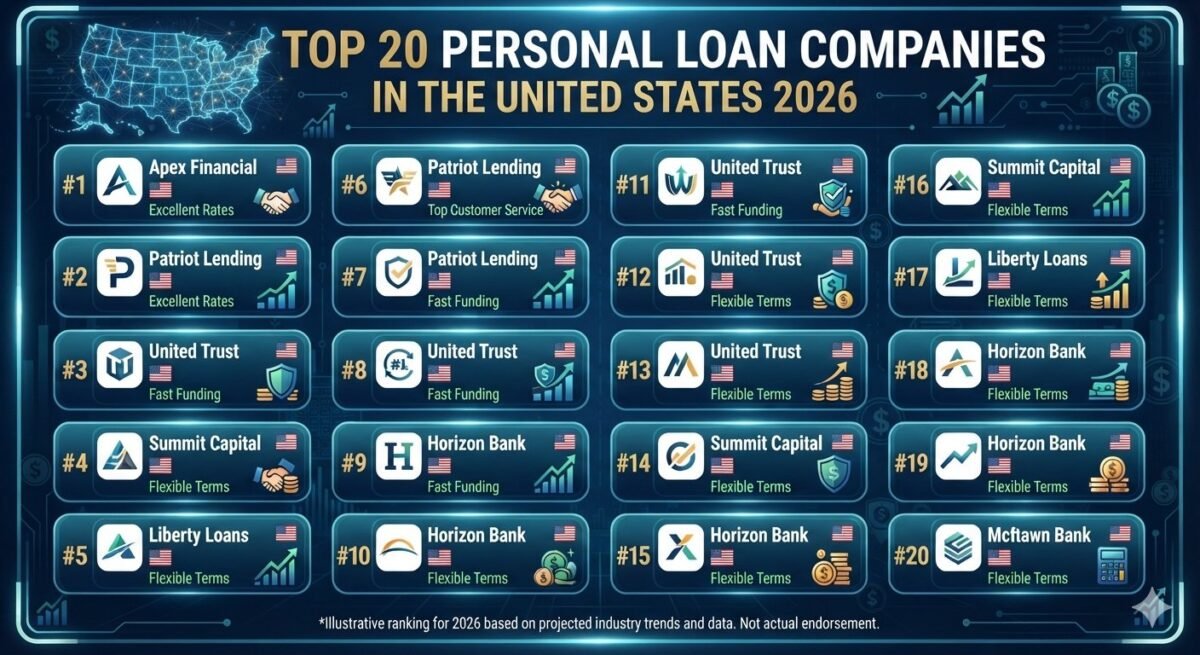
Finding the best personal loan rates in the United States requires more than choosing the lender advertising the lowest interest rate. You need to understand how lenders calculate interest, compare annual percentage rates (APRs), review loan terms, evaluate your credit score, and identify fees that can increase borrowing costs. Top 10 personal Loan company
Whether you have excellent credit, a fair credit history, or are working to improve your financial profile, understanding the personal loan market can help you make a more informed borrowing decision.
This guide explains how to get the best personal loan rates in the USA, what affects loan pricing, where to compare lenders, and how to reduce the overall cost of borrowing.
1. Understand How Personal Loan Interest Rates Work
Before applying for a personal loan, understand how interest rates affect your monthly payments and total repayment amount.
A personal loan is generally an installment loan that allows you to borrow a fixed amount and repay it through scheduled payments over an agreed period.

The lender charges interest for providing the money. Your interest rate is usually determined by factors such as:
- Credit score and credit history.
- Annual income.
- Existing debt obligations.
- Loan amount.
- Repayment period.
- Employment and financial stability.
- Lender-specific underwriting requirements.
Most personal loans have fixed interest rates, meaning the interest rate generally stays the same throughout the repayment period.
For example, consider borrowing $10,000 for three years.
Example: How interest rates affect a personal loan
Illustrative estimates for a $10,000 loan over 36 months, excluding fees.
| Interest rate | Monthly payment | Total interest |
|---|---|---|
| 8% | $313.36 | $1,281 |
| 12% | $332.14 | $1,957 |
| 18% | $361.52 | $3,015 |
A lower interest rate can reduce both monthly payments and the total cost of borrowing.
Even a few percentage points can make a meaningful difference, especially when borrowing larger amounts or choosing longer repayment terms.
2. Check Your Credit Score Before Applying
Your credit score is one of the most important factors lenders consider when determining your personal loan rate.
Generally, borrowers with higher credit scores are more likely to qualify for lower interest rates because lenders may consider them less risky. Low interest Personal loans
Here is a simplified overview of common FICO credit score ranges:
| Credit score | Category |
|---|---|
| 300–579 | Poor |
| 580–669 | Fair |
| 670–739 | Good |
| 740–799 | Very Good |
| 800–850 | Exceptional |
These ranges are general guidelines. Individual lenders use different underwriting standards, and some also consider alternative credit information.
How to check your credit score:
- Review your credit reports through the official AnnualCreditReport.com website.
- Check whether your credit accounts are reported accurately.
- Identify missed payments or accounts in collections.
- Review your credit card balances and utilization.
- Dispute inaccurate information with the appropriate credit bureau.
- Avoid unnecessary credit applications before applying for a loan.
Checking your own credit report does not generally hurt your credit score.
If your credit score is lower than expected, consider improving your credit profile before applying, provided waiting is practical for your financial situation.
3. Compare Personal Loan Rates From Multiple Lenders
One of the most effective ways to find competitive personal loan rates is to compare offers from several lenders.
Do not assume that your existing bank automatically offers the best deal. Online lenders, credit unions, and traditional financial institutions may have different eligibility requirements, interest rates, and repayment options.
Consider comparing these types of lenders:
Traditional Banks
Banks offer personal loans to eligible customers and may provide competitive terms depending on their credit profile and relationship with the institution.
Potential advantages include:
- Established financial institutions.
- Existing customer relationships.
- Multiple banking services.
- Access to in-person assistance at participating branches.
Online Lenders
Online lenders allow borrowers to explore loan options and complete applications digitally.
Potential advantages include:
- Convenient application processes.
- Online rate comparisons.
- Flexible loan amounts and repayment periods.
- Prequalification options with some lenders.
However, review lender fees, eligibility conditions, customer support, and funding timelines carefully.
Credit Unions
Credit unions are member-owned financial institutions that may offer competitive personal loan terms.
Some credit unions provide flexible underwriting or lower fees for eligible members. Membership requirements vary.
Peer-to-Peer Lending Platforms
Some lending platforms connect borrowers with investors or financial institutions. Their rates and approval requirements vary based on borrower risk and platform policies.
Always verify the platform’s legitimacy, lending terms, and applicable fees before proceeding.
4. Understand APR Before Choosing a Personal Loan
A common mistake borrowers make is comparing loans based only on the advertised interest rate.
Instead, pay close attention to the annual percentage rate (APR).
The interest rate represents the cost of borrowing the principal. APR generally includes the interest rate and certain required loan charges, such as origination fees, expressed as an annualized borrowing cost.
For example:
- Lender A advertises a 10% interest rate with a 3% origination fee.
- Lender B offers an 11% interest rate with no origination fee.
Although Lender A has the lower advertised interest rate, its origination fee may make the loan more expensive.
Compare the APR, amount actually received, monthly payment, repayment schedule, and total repayment amount.
Tip: A loan with the lowest advertised interest rate is not necessarily the cheapest loan overall.
5. Improve Your Debt-to-Income Ratio Before Applying
Your debt-to-income ratio (DTI) measures how much of your monthly income goes toward paying existing debts.
Lenders use this ratio to evaluate whether you can comfortably afford another monthly payment.
Ways to improve your DTI:
- Pay down outstanding credit card balances.
- Reduce unnecessary monthly debt obligations.
- Avoid taking on additional loans.
- Increase your income where possible.
- Consider borrowing a smaller amount.
- Review your monthly budget before applying.
Remember that lenders may calculate DTI differently, and some consider additional expenses and financial obligations.
6. Choose the Right Loan Amount and Repayment Term
The amount you borrow and the time you take to repay it can influence the interest rate and overall cost of your personal loan.
A longer repayment period may lower your monthly payment, but it can increase the total interest you pay.
A shorter repayment period may reduce the overall interest expense but require larger monthly payments.
Consider this example:
Example: $15,000 personal loan at 12% APR
Illustrative fixed-rate loan calculations, excluding additional fees.
| Loan term | Monthly payment | Total interest |
| 2 years | $706 | $1,944 |
| 3 years | $498 | $2,928 |
| 5 years | $334 | $5,038 |
Key takeaway: The five-year loan has a lower monthly payment, but costs considerably more in interest.
Choose a repayment term that balances affordability and total borrowing costs. Avoid selecting a longer term simply to make the monthly payment look smaller.
7. Look for Personal Loan Prequalification Options
Prequalification is a useful way to explore potential personal loan offers before submitting a full application.
Many banks and online lenders allow borrowers to check estimated eligibility and rates using basic financial information.
The process may involve:
- Entering your name and contact information.
- Providing your estimated annual income.
- Selecting the amount you want to borrow.
- Choosing a preferred repayment period.
- Providing information about your credit profile.
- Reviewing potential loan offers.
Many lenders use a soft credit inquiry for prequalification, which generally does not affect your credit score.
However, prequalification is not the same as final loan approval. A lender may conduct a hard credit inquiry and verify your income, identity, and other information before making a final decision.
Why prequalification matters: It allows you to compare potential interest rates without immediately committing to a loan.
8. Consider Personal Loan Discounts
Some lenders offer interest rate discounts that can reduce the overall cost of borrowing.
Before accepting a loan, ask whether the lender provides any of the following:
Autopay discount: Some lenders reduce the interest rate when you enroll in automatic monthly payments.
Existing customer discount: Your current bank or financial institution may provide special pricing to qualifying customers.
Relationship discounts: Certain lenders offer better terms to borrowers who maintain eligible accounts or meet specific requirements.
Debt consolidation discounts: Some lenders may offer competitive rates for loans used to pay off qualifying existing debts.
Read the terms carefully. A discount may require maintaining a particular account, enrolling in automatic payments, or meeting other conditions.
9. Avoid Unnecessary Personal Loan Fees
Interest is not the only expense associated with borrowing money. Some personal loans include additional charges that increase your total repayment cost.
Common fees include:
| Fee type | What it means |
|---|---|
| Origination fee | A charge for processing and issuing the loan |
| Late payment fee | A penalty for missing a payment deadline |
| Returned payment fee | A charge when a payment is rejected |
| Prepayment penalty | A charge for paying off a loan early, if permitted |
| Administrative fee | A fee for certain loan-related services |
For example, if you are approved for a $10,000 personal loan with a 5% origination fee deducted from the proceeds, you may receive only $9,500 while remaining responsible for repaying the full loan principal.
Always calculate how much money you will actually receive and how much you will repay.
10. Compare Personal Loan Rates in the United States in 2026
Personal loan interest rates vary according to economic conditions, lender policies, credit scores, and loan terms.
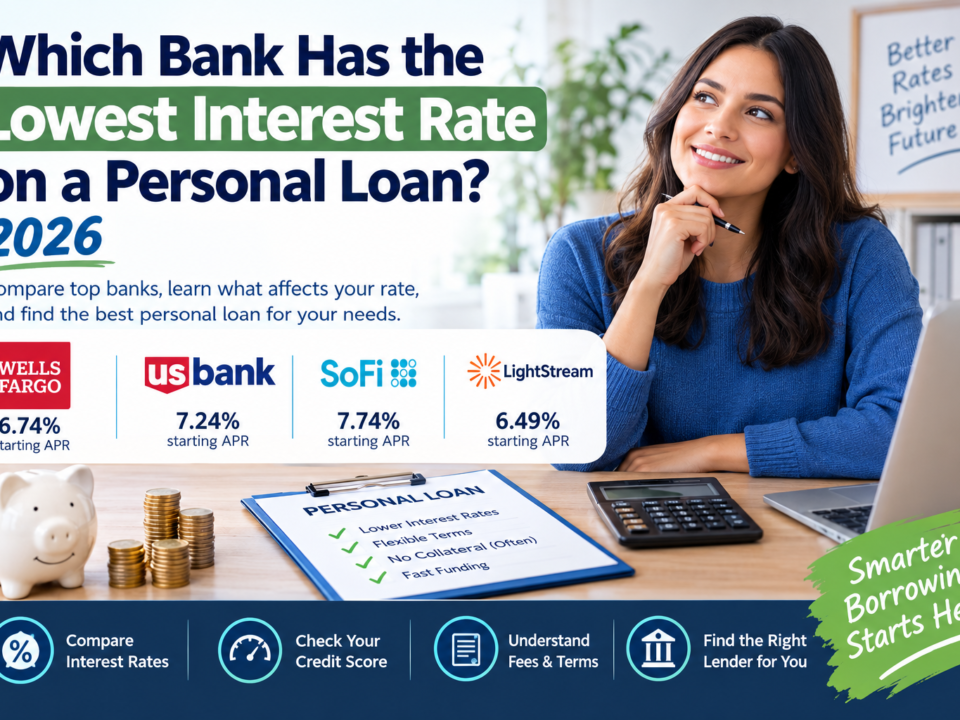
For a useful market benchmark, the Bankrate Monitor’s national index reported an average unsecured personal loan rate of approximately 12.47% on November 11, 2026. Its benchmark uses a specified borrower profile rather than representing every borrower in the country.
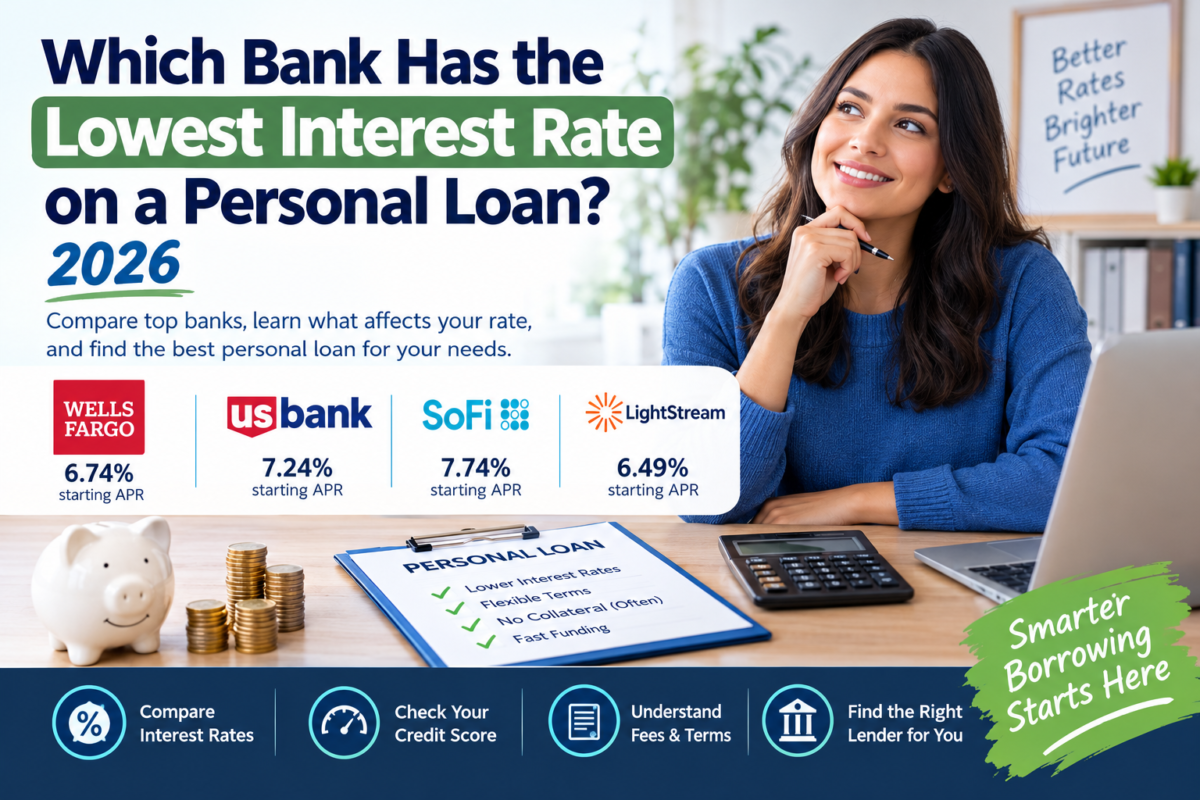
Here are examples of advertised lender APR ranges reported in November 2026.
| Lender | Advertised APR range |
|---|---|
| SoFi | 6.49%–35.49% |
| Discover | 7.99%–24.99% |
| Upgrade | 7.74%–35.99% |
| Wells Fargo | 6.74%–26.74% |
| PenFed | 6.09%–17.99% |
Source: Published lender comparisons from NerdWallet and Bankrate. Rates are subject to change, eligibility requirements, fees, and lender approval. These are not guaranteed offers. NerdWallet+1
The lowest advertised APR may only be available to borrowers with excellent credit and qualifying financial profiles.
Before applying, compare:
- Minimum and maximum APR.
- Minimum credit score requirements.
- Loan amounts.
- Repayment periods.
- Origination fees.
- Funding timelines.
- Late payment policies.
- Prepayment conditions.
11. Understand How Your Income and Employment Affect Loan Approval
Lenders want to determine whether you have enough income to repay the loan.
Although credit scores are important, income stability and existing financial obligations can also influence approval decisions and interest rates.
Lenders may consider:
- Annual salary.
- Employment history.
- Self-employment income.
- Monthly debt payments.
- Additional income sources.
- Bank account information.
- Recent financial changes.
If you are self-employed, lenders may request additional documentation, such as tax returns, bank statements, or profit-and-loss statements.
If your income changes regularly, organize your financial records before applying.
Avoid exaggerating your income or providing inaccurate employment information. Incorrect details can lead to application rejection or other consequences.
12. Consider a Co-Signer if Your Credit Is Limited
If your credit history is limited or your credit score is relatively low, applying with a qualified co-signer may help you access more favorable loan terms with some lenders.
A co-signer agrees to take responsibility for the debt if the primary borrower fails to make payments.
A lender may evaluate both applicants’ financial information, including:
- Credit scores.
- Income.
- Existing debts.
- Credit histories.
- Repayment capacity.
However, co-signing creates financial responsibilities and risks for the other person.
Missed payments can damage both borrowers’ credit histories, and the co-signer may be legally responsible for the unpaid balance.
Discuss these responsibilities carefully before asking someone to co-sign.
13. Be Careful With Personal Loans for Bad Credit
Borrowers with poor credit may find it more difficult to qualify for low-interest personal loans.
Some lenders accept applicants with lower credit scores, but their interest rates and fees may be significantly higher.
If you have bad credit, consider these steps:
- Review your credit report for errors.
- Pay down existing credit card balances where possible.
- Compare lenders that offer soft-pull prequalification.
- Request a smaller loan amount if practical.
- Consider credit unions and nonprofit financial counseling.
- Avoid lenders that promise guaranteed approval.
- Review the full APR before accepting an offer.
Be especially cautious about payday loans and other high-cost short-term borrowing products. They can create expensive repayment cycles.
A personal loan with a high APR may not improve your financial situation if the monthly payments are unaffordable.
14. Avoid Common Mistakes When Applying for Personal Loans
Even financially responsible borrowers can make mistakes when comparing personal loan offers.
Watch out for these common problems:
- Applying with too many lenders without understanding the credit inquiry process.
- Accepting the first loan offer without comparing alternatives.
- Choosing a loan based only on its monthly payment.
- Ignoring origination fees.
- Borrowing more money than necessary.
- Selecting a repayment period that is too long.
- Overlooking late payment penalties.
- Providing inaccurate application information.
- Using a personal loan to accumulate additional unnecessary debt.
- Accepting an unaffordable payment schedule.
A careful comparison can help you avoid unnecessary borrowing costs and select a loan that fits your budget.
15. Follow a Step-by-Step Strategy to Get the Best Personal Loan Rates
Finding a competitive personal loan rate becomes easier when you follow a structured approach.
Your personal loan rate checklist
0 of 9 completed
0%Check your credit score and credit reports.Calculate your monthly income and existing debt payments.Determine the exact amount you need to borrow.Compare banks, credit unions, and online lenders.Use prequalification to review potential APR offers.Compare origination fees and total repayment costs.Choose a suitable monthly payment and loan term.Review the loan agreement before accepting.Set up automatic payments if the discount and terms are worthwhile.
Reset checklist
Taking these steps before applying can help you identify competitive loan offers and avoid unnecessary costs.
16. When Is the Right Time to Apply for a Personal Loan?
The best time to apply is when you have a clear financial need, a realistic repayment plan, and a credit profile that gives you a reasonable chance of qualifying for affordable terms.
Consider waiting if:
- You recently missed several payments.
- Your credit card balances are unusually high.
- You have recently applied for several loans.
- Your income is unstable.
- You have not reviewed your credit report.
- You are unsure whether you can afford the monthly payment.
However, delaying an application is not always practical, especially when facing an urgent financial expense.
Compare the cost of borrowing with available alternatives and make sure the loan solves a genuine financial need.
17. Personal Loans vs. Other Borrowing Options
A personal loan is not the only way to borrow money in the United States. Depending on your financial situation, another option may be more suitable.
| Borrowing option | Potential benefit | Possible disadvantage |
|---|---|---|
| Personal loan | Fixed payments and predictable repayment | Interest and fees |
| Credit card | Flexible access to credit | Often high interest rates |
| Home equity loan | May offer lower rates for eligible homeowners | Uses home equity as collateral |
| HELOC | Flexible borrowing against home equity | Variable rates may increase |
| 0% introductory APR card | Temporary interest-free financing | Promotional period expires |
| Credit union loan | Potentially competitive borrowing costs | Membership and eligibility requirements |
The right choice depends on the amount needed, repayment ability, credit profile, and willingness to provide collateral.
For example, a personal loan may be suitable for consolidating high-interest credit card debt if the new APR and fees are lower and you avoid accumulating new card balances.
Frequently Asked Questions (FAQs)
1. What is a good interest rate for a personal loan in the USA?
A good personal loan rate depends on your credit score, income, loan amount, and repayment period. Borrowers with excellent credit may qualify for single-digit APRs, while borrowers with weaker credit may receive substantially higher offers. Compare the APR rather than just the advertised interest rate.
2. How can I get the lowest personal loan interest rate?
Improve your credit score, reduce existing debt, compare multiple lenders, use prequalification, choose an affordable repayment term, and look for eligible autopay discounts. Comparing offers before submitting formal applications can help you find more competitive terms.
3. What credit score do I need to get a low-interest personal loan?
A credit score of 740 or higher may improve your chances of qualifying for competitive personal loan rates. However, some lenders consider applicants with lower scores. Income, payment history, debt-to-income ratio, and other financial factors also matter.
4. Which bank offers the lowest personal loan rates?
There is no single bank that always offers the lowest rate to every borrower. Wells Fargo, Discover, Citibank, PNC, and other financial institutions publish different APR ranges. Compare current offers based on your eligibility and loan requirements.
5. Can I get a personal loan with a 600 credit score?
Yes, some lenders consider applicants with credit scores around 600. However, approval is not guaranteed, and the interest rate may be higher. Consider prequalification and compare the total borrowing cost before accepting an offer.
6. Does checking personal loan rates affect my credit score?
Checking estimated rates through a lender’s soft-credit prequalification process generally does not affect your credit score. However, submitting a formal application may trigger a hard inquiry, which can temporarily lower your score.
7. Are credit unions better than banks for personal loans?
Credit unions may offer competitive interest rates and flexible lending terms. However, membership requirements, loan limits, and eligibility rules vary. Compare credit unions with banks and online lenders before choosing.
8. What is the difference between APR and interest rate?
The interest rate represents the cost of borrowing the principal. APR generally includes the interest rate and certain loan fees, providing a broader measure of borrowing costs. Comparing APRs can help you evaluate different loan offers.
9. Can I negotiate a lower personal loan interest rate?
You can ask a lender whether it offers rate adjustments, relationship discounts, or better terms based on your credit profile. Comparing competing offers may also help you identify more affordable financing.
10. Is a fixed-rate personal loan better than a variable-rate loan?
A fixed-rate loan offers predictable interest charges and monthly payments, making budgeting easier. A variable-rate loan may change over time, potentially increasing your borrowing costs. Review the terms before choosing.
11. How much personal loan can I qualify for?
Your eligible loan amount depends on your credit history, income, debt obligations, repayment ability, and lender requirements. Some lenders offer loans of a few hundred dollars, while others provide amounts reaching $100,000.
12. Can I pay off my personal loan early?
Many personal loans allow early repayment without a penalty, but policies differ. Review your loan agreement to determine whether prepayment fees apply and whether early repayment will reduce your total interest expense.
Conclusion: Find a Personal Loan Rate That Fits Your Budget
Getting the best personal loan rates in the United States requires research, preparation, and careful comparison. Your credit score, income, existing debt, loan amount, and repayment term all influence the offers lenders may provide.
Start by checking your credit profile and calculating how much you can comfortably repay each month. Compare banks, online lenders, and credit unions, and use prequalification options to explore potential rates before submitting formal applications.
Most importantly, look beyond advertised interest rates. Compare APRs, origination fees, repayment schedules, and total borrowing costs before signing a loan agreement.
A well-chosen personal loan can help you manage expenses, consolidate debt, and achieve financial goals without putting unnecessary pressure on your monthly budget.