

How to Get Pre-Approved for a Home Loan: A Complete Step-by-Step Guide
October 14, 2026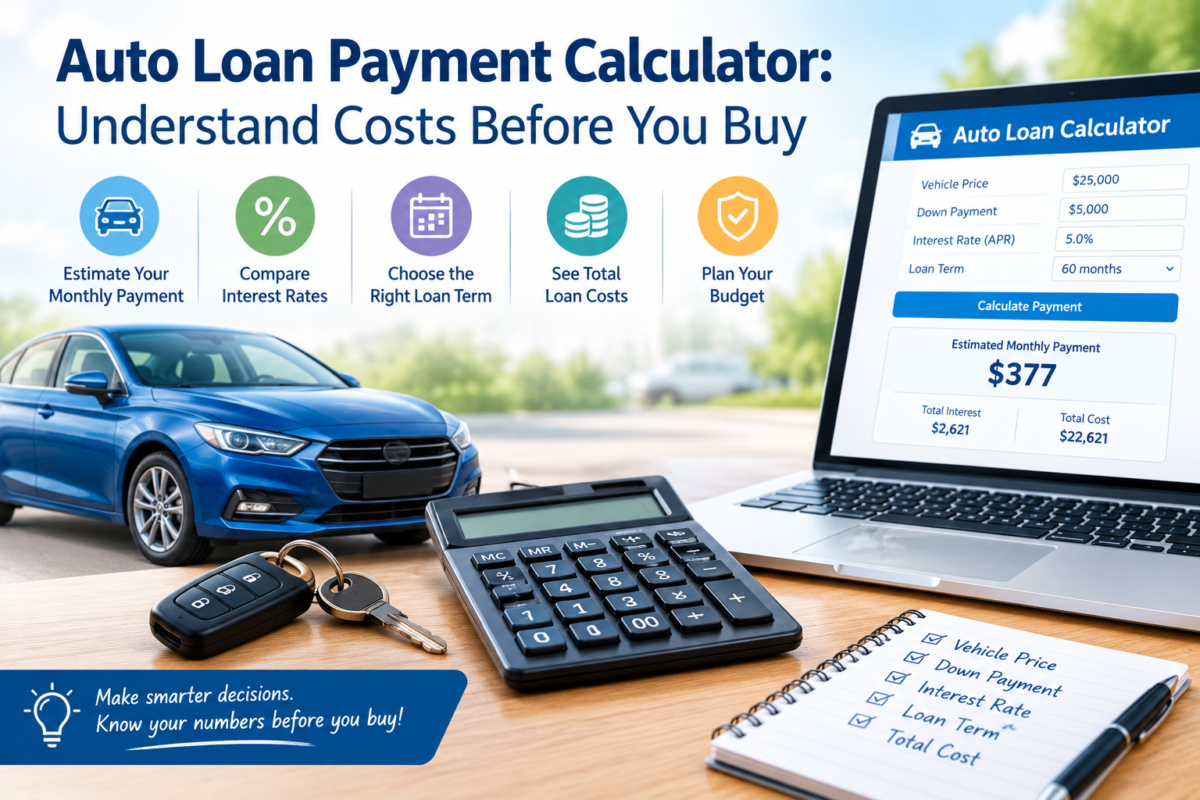
An auto loan payment calculator estimates the recurring amount you may owe when financing a vehicle. Its core inputs are the amount borrowed, the annual interest rate, and the loan term, or the time allowed to repay the debt. Based on these details, the tool calculates an estimated payment, usually shown as a monthly figure. A larger loan balance or higher rate generally increases the payment, while extending the term can lower it month to month. However, a longer term may also mean paying more interest over the life of the loan.
The displayed figure is a planning estimate, not a lender’s offer or guaranteed quote. The calculation may not reflect the exact rate you qualify for, since a lender can consider factors such as credit history, income, down payment, and loan structure. Calculators also differ in what they include. Some estimate only principal and interest, while others let you add sales tax, registration charges, dealer fees, or a trade-in value. Insurance, maintenance, fuel, and other ownership expenses are often excluded, so the estimated payment should not be mistaken for the full cost of owning a car.
AI Summary: Auto Loan Payment Calculator
An auto loan payment calculator helps car buyers estimate monthly payments, compare financing options, and understand the cost of borrowing before purchasing a vehicle.
- Enter accurate information: Use the negotiated vehicle price, down payment, trade-in equity, APR, loan term, and applicable taxes and fees.
- Understand your payment: Monthly payments generally include principal and interest. Check whether the calculator includes additional charges.
- Compare loan terms: Shorter terms usually mean higher monthly payments but lower total interest. Longer terms can cost more overall.
- Review the full budget: Include insurance, fuel, registration, maintenance, and repairs when assessing vehicle affordability.
- Compare lender offers: Evaluate APR, fees, total interest, and total payments using comparable loan amounts and terms.
Key takeaway: Use the calculator to test different prices, down payments, rates, and repayment periods. Treat the result as an estimate and verify the final loan amount, APR, fees, and payment schedule with your lender before signing.
Disclaimer: This summary is for informational purposes only. Actual payments and borrowing costs depend on lender approval, loan terms, fees, and the final financing agreement.
Using a calculator early in the shopping process can help you set a realistic budget before visiting a dealership or applying for financing. You can test different vehicle prices, down payments, interest rates, and repayment periods to see how each choice affects the monthly amount and total borrowing cost. Comparing results across vehicles can reveal whether a lower purchase price or a larger down payment makes a meaningful difference. It can also help you assess financing offers on consistent assumptions. Treat the estimate as a starting point, then confirm the complete payment schedule, fees, and loan terms with the lender before you commit.
Before using an auto loan payment calculator, gather estimates for the vehicle price or the amount you expect to borrow. These figures are related but not identical: the vehicle price is the cost of the car itself, while the principal is the amount financed after adjustments. A calculator can help show how those adjustments affect monthly payments, but its results depend on the information entered. If you are comparing vehicles, use the same assumptions for each estimate so the payment figures are easier to evaluate fairly.
Enter your planned down payment and, if applicable, the estimated value of your trade-in. Both can reduce the amount you need to finance. Include sales tax and other costs, such as registration, documentation, or dealer fees, because these may increase the total financed amount when they are not paid upfront. For example, a low advertised vehicle price may produce a higher loan principal once taxes and fees are added. Check which charges are included in any quoted price, and avoid counting a trade-in’s full value if you still owe money on it; any outstanding balance may affect the transaction.
You will also need the annual percentage rate (APR) and the loan length, typically expressed in months. The APR reflects the cost of borrowing and can vary with credit history, lender, and loan terms. A longer term may lower the estimated monthly payment, but it can increase the total interest paid. Use a realistic APR based on a prequalification or lender offer rather than assuming the lowest advertised rate applies. Likewise, enter a term you are genuinely considering. When available, compare your estimates with written figures from lenders or the dealership, confirming the loan amount, fees, APR, and term. Accurate inputs make the calculator more useful for planning and comparing financing options before you buy.
A typical fixed-rate auto loan is repaid through amortization: the borrower makes regular payments that gradually cover both the cost of borrowing and the amount originally borrowed. The loan balance does not fall by the full payment amount, because part of each payment goes toward interest. The remaining part reduces the principal, which is the original amount financed. Understanding this split helps explain why a payment can stay the same while the balance changes at a different pace over the life of the loan.
At the beginning of the repayment period, the outstanding balance is relatively large, so interest generally accounts for a larger share of each payment. As payments reduce that balance, less interest accrues in later periods. More of each subsequent payment can then go toward principal. This gradual shift is characteristic of many standard amortizing loans, although the precise schedule depends on the agreement and how interest is calculated. A payment estimate should not be treated as a complete description of every lender’s terms.
An auto loan payment calculator typically uses three core inputs: principal, the periodic interest rate, and the total number of payments. Principal is the amount financed, which may differ from a vehicle’s purchase price after a down payment, trade-in, taxes, fees, or other amounts are included. The periodic rate represents the interest charged for each payment period, while the payment count reflects the repayment schedule—for example, monthly payments over a set number of months. With these inputs, the calculator estimates a level payment that pays off the loan over the stated term, assuming a fixed rate and regular payments.
The result is useful for comparing estimated payments across different loan amounts, rates, or terms, but it is not necessarily the amount due under every financing product. Variable-rate loans, balloon payments, fees, irregular schedules, or lender-specific interest methods can produce different costs or payment patterns. Check the loan offer and its disclosures to confirm the rate, term, payment frequency, and any additional charges before relying on an estimate.
Begin with the negotiated vehicle price, rather than the advertised price, because dealer discounts or agreed adjustments may change the amount you need to finance. Enter the down payment you plan to make. If you are trading in a vehicle, include its value only after checking how the calculator handles trade-ins. Some tools ask for gross trade-in value, while others expect your equity: the trade-in value minus any remaining loan payoff. Confirm the method before entering a figure, and account separately for an outstanding balance if the tool requires it.
Next, add taxes and fees that will be financed. These may include sales tax, registration charges, documentation fees, or other costs, depending on your location and purchase agreement. Do not include costs you will pay upfront. Enter the annual percentage rate (APR) quoted by the lender, then select the proposed loan term, usually expressed in months. If you do not yet have a confirmed APR, use a reasonable estimate and treat the result as provisional; your final rate can affect both the payment and total borrowing cost.
Review the payment estimate and check that the inputs match the figures on your buyer’s order or lender quote. An auto loan payment calculator provides an estimate, not a binding offer, and may not include every charge or product in the transaction. To understand what drives the result, adjust one input at a time. For example, compare the effect of a larger down payment, a different term, or a lower vehicle price while keeping the other figures unchanged. This makes each comparison easier to interpret.
Save or record each scenario with its inputs, estimated monthly payment, and any displayed total interest or overall repayment amount. Label scenarios clearly, such as “shorter term” or “higher down payment,” so you can compare them later without relying on memory. Before making a decision, verify taxes, fees, trade-in equity, APR, and loan duration with the dealer or lender. Consistent inputs help you compare financing options more accurately and avoid mistaking an incomplete estimate for the final cost.
An auto loan payment calculator can show several figures, and each describes a different part of the borrowing decision. The monthly payment is the amount due at regular intervals, typically once a month. It helps you plan cash flow, but it does not reveal the full cost of the vehicle financing on its own. A payment that fits your budget may still come with substantial interest or a lengthy repayment commitment.
The total of payments is the sum of all scheduled installments over the loan term. It includes repayment of the amount borrowed and the interest charged across the life of the loan. Total interest isolates the borrowing cost: it is the amount paid to the lender beyond the principal. The total amount financed generally refers to the credit provided for the purchase, which may include eligible fees or other costs rolled into the loan. Review the calculator’s definitions, since the exact figures shown can depend on the information entered and how the tool presents them.
A smaller monthly payment can result from borrowing less, securing a lower interest rate, or extending the repayment period. A larger down payment or less expensive vehicle reduces the amount financed; stronger credit or lender offers may help lower the rate. A longer term spreads repayment across more months, reducing each installment, but it often increases total interest because the balance remains outstanding for longer. It can also leave you owing more than the vehicle is worth for an extended period, a situation known as negative equity. This may complicate selling or trading in the car before the loan is paid off.
Compare scenarios by looking at the payment alongside the total of payments, total interest, and amount financed. Include taxes, fees, insurance, fuel, and maintenance when assessing your overall vehicle budget, as these may not appear in the loan estimate. Consider whether the payment remains manageable if expenses change, and whether you expect to keep the vehicle for the full term. Judging affordability by the full cost of borrowing—not the monthly figure alone—can help you choose a loan that suits both your present budget and longer-term financial plans.
A down payment reduces the amount you need to borrow. Because interest is charged on the financed balance, putting more money down generally lowers both the monthly payment and the total interest paid over the loan term. It can also create a larger cushion between the loan balance and the vehicle’s market value, reducing the chance that you owe more than the car is worth if you need to sell or trade it early. Enter the planned down payment in an auto loan payment calculator to see how different amounts affect the estimate.
A trade-in can lower the amount financed as well, but its effect depends on the vehicle’s value and any loan balance still attached to it. If the trade-in is worth more than the payoff amount, the difference is positive equity and can be applied toward the next purchase. For example, a vehicle valued at $12,000 with a $9,000 payoff provides $3,000 in equity to reduce the new loan principal. Confirm the dealer’s valuation and obtain a current payoff quote before relying on that figure.
If the existing loan payoff is greater than the trade-in value, the difference is negative equity. A dealer may offer to roll that amount into the new auto loan, but doing so increases the principal, monthly payment, and interest cost. It may also leave you owing more than the new vehicle is worth. Compare the new loan estimate with and without the rolled-over balance, and consider paying the difference separately or postponing the purchase if the added debt makes the budget difficult.
Optional products and dealer add-ons can also raise the financed balance. These may include service contracts, protection packages, accessories, or other coverage. Ask whether each item is necessary or optional, what it costs, and whether it is included in the quoted vehicle price. Then check that the calculator’s inputs reflect the actual amount being financed, including any selected add-ons, fees, trade-in equity, and negative equity. An auto loan payment calculator is only as accurate as the information entered, so review the itemized offer before comparing payments.
An annual percentage rate (APR) reflects the yearly cost of borrowing, combining interest with certain lender charges where applicable. It offers a broader comparison than the interest rate alone, although fees and repayment terms still deserve separate attention. When using an auto loan payment calculator, enter the APR, principal, and loan term accurately to estimate scheduled payments and total interest. Even a small rate difference can add up over years, increasing either the monthly payment or the total amount repaid, depending on the loan’s structure. Compare offers using matching assumptions rather than relying on a headline rate alone.
For a fair comparison, request quotes for the same amount financed and repayment term. If one lender’s offer uses a larger principal, perhaps because taxes or add-ons are included, its payment will not be directly comparable. Review origination, documentation, or other fees, and check whether they are paid upfront or folded into the balance. Also examine eligibility conditions, including credit score, income, vehicle age, and down-payment requirements. A quoted APR may be available only to applicants who meet specific standards. Comparing the complete cost and conditions can reveal whether a seemingly attractive offer suits your circumstances and budget.
A shorter loan term generally raises monthly payments because the balance is repaid faster, but it usually reduces the total interest paid. A longer term spreads payments across more months, often making them easier to manage, yet interest accrues for longer and the overall cost can rise. Use a calculator to test different terms while keeping the loan amount and APR constant; compare both the payment and total repayment, not just affordability today. Promotional rates can be useful, but they may require excellent credit, a new vehicle, a limited term, or other conditions. Confirm the offer’s duration and qualification rules before treating it as available.
A common error when using an auto loan payment calculator is entering the vehicle’s sticker price rather than the negotiated purchase price. The sticker price may differ substantially from the amount agreed upon after negotiations, incentives, or discounts. Estimates can also be misleading when buyers leave out sales tax, documentation charges, title costs, delivery fees, or other amounts added to the contract. Include the full out-the-door price where possible, and check which charges are already reflected in the calculator.
Trade-in value requires similar care. Subtracting the trade-in’s full value without accounting for the remaining balance on an existing loan can overstate the down payment. If the balance exceeds the vehicle’s value, the negative equity may be added to the new loan, increasing the amount financed. Another frequent mistake is entering an APR that is more favorable than the borrower is likely to receive. Rates depend on factors such as credit history, lender criteria, loan size, and vehicle details, so use a realistic rate and compare it with written offers.
A lower monthly payment is not necessarily a lower-cost loan. Choosing a longer term can reduce each installment while increasing the total interest paid and extending the period of debt. Review both the estimated payment and the total amount paid over the loan’s life before settling on a term. Even a carefully completed auto loan payment calculator provides only a financing estimate, not a complete ownership budget. Payments typically exclude insurance, fuel, maintenance, repairs, and registration, while these costs can change over time. The estimate may also differ from a lender’s final offer because approval and pricing depend on the borrower’s credit profile, lender rules, vehicle age, and the final contract details. Treat the result as a planning tool, then confirm every figure and fee in the actual agreement before signing.
An auto loan payment calculator is a useful starting point, not a complete affordability test. Before shopping, set a monthly transportation budget that includes more than the loan payment. Add estimated insurance, fuel, routine maintenance, registration, parking, and any recurring fees. Costs vary by vehicle, location, driving habits, and coverage choices, so use realistic quotes and estimates rather than broad averages. Leave room in the budget for repairs and changes in fuel or insurance prices. Then calculate a payment ceiling that still leaves enough for housing, food, savings, and other essential expenses.
Where practical, seek financing preapproval from a bank, credit union, or other lender before visiting a dealership. Preapproval can clarify the likely rate and borrowing limit, while leaving room to compare the dealer’s financing. Compare written offers using the same loan amount and term; examine the APR, not just the advertised interest rate, because APR generally reflects certain fees. Consider how a longer term may lower the monthly payment but increase total interest and keep you in debt longer. Check for optional products, fees, or conditions that change the amount financed. Use the calculator to test realistic rates, down payments, and terms, then verify figures against the lender’s documents.
Before signing, read the contract carefully and confirm that the APR, amount financed, payment schedule, and total of payments match the written offer you chose. Ask for clarification about any unfamiliar charge or term, and make sure you understand when payments begin and whether the rate can change. Assess the proposed payment alongside ordinary monthly expenses and a reserve for unexpected costs, such as repairs or reduced income. Choose a payment and loan term you can sustain without relying on ideal circumstances. If the numbers only work by extending the loan substantially or cutting essential spending, consider a less expensive vehicle, a larger down payment, or waiting while you save. A manageable commitment is more valuable than stretching your budget for a higher-priced car.
FAQs: Auto Loan Payment Calculator: Understand Costs Before You Buy
1. What is an auto loan payment calculator?
An auto loan payment calculator is an online tool that estimates your monthly car loan payment based on the vehicle price, down payment, interest rate, loan term, and amount financed. It helps you understand the potential cost of buying a car before applying for financing.
2. How do I calculate my monthly auto loan payment?
To estimate your monthly payment, enter the amount you plan to borrow, your annual interest rate, and your loan term into an auto loan payment calculator. The calculator uses these figures to estimate your principal and interest payment. Taxes, registration fees, insurance, and other costs may need to be calculated separately.
3. What information do I need to use an auto loan calculator?
You generally need the following information:
- Vehicle purchase price
- Down payment or trade-in value
- Loan amount
- Annual percentage rate (APR)
- Loan term in months
- Applicable taxes and fees, if included in the calculator
Providing accurate estimates helps you understand your potential monthly payment and total borrowing costs.
4. Does an auto loan payment calculator include interest?
Yes, most auto loan payment calculators include interest when estimating monthly payments. Some calculators also estimate the total interest paid over the life of the loan. Check whether the tool uses the interest rate or APR, as APR may reflect certain additional borrowing costs.
5. How does the interest rate affect my car loan payment?
A higher interest rate generally increases both your monthly payment and the total interest paid over the loan term. A lower rate can reduce borrowing costs. Your rate may depend on your credit history, income, loan term, vehicle, lender, and current market conditions.
6. Is a longer auto loan term better?
A longer loan term usually lowers the monthly payment because repayment is spread over more months. However, it often increases the total interest paid and may increase the risk of owing more than the vehicle is worth. Compare both monthly payments and total loan costs before choosing a term.
7. How does a down payment affect my monthly car payment?
A larger down payment reduces the amount you need to borrow, which generally lowers your monthly payment and total interest costs. It may also help you qualify for more favorable financing terms. Use an auto loan calculator to compare different down payment amounts.
8. Does an auto loan calculator include taxes and fees?
It depends on the calculator. Some tools allow you to include sales tax, title fees, registration fees, dealer charges, and other costs in the amount financed. Others calculate principal and interest only. Review the calculator’s inputs to determine which expenses are included.
9. What is the difference between an interest rate and APR on a car loan?
The interest rate is the cost of borrowing the principal, expressed as a percentage. APR represents the annualized borrowing cost and may include certain lender fees in addition to interest. Comparing APRs can help you evaluate financing offers, provided the loans have comparable terms and fee structures.
10. Can I use an auto loan payment calculator before applying for a loan?
Yes. Using a calculator before applying can help you establish a realistic budget, compare loan terms, estimate interest costs, and determine how much you can afford to borrow. You can then seek prequalification or financing offers from lenders.
11. How much car can I afford based on my monthly payment?
Your affordable vehicle price depends on your income, existing debts, living expenses, down payment, interest rate, and loan term. Remember to budget for insurance, fuel, maintenance, repairs, parking, and registration in addition to the loan payment. A payment that fits your budget on paper may still leave too little room for other expenses.
12. Can an auto loan calculator help me compare loan offers?
Yes. Enter the same loan amount into the calculator and compare different APRs and repayment terms. Review the estimated monthly payment, total interest, and total repayment amount. Also compare fees, prepayment conditions, and any required add-on products before selecting a lender.
13. How does my credit score affect my auto loan payment?
Your credit score can influence the interest rate a lender offers. Borrowers with stronger credit profiles may qualify for lower rates, while those with weaker credit may face higher rates or stricter conditions. Comparing multiple offers and reviewing your credit report before applying may help you find more suitable financing.
14. Can I calculate payments for a used car loan?
Yes. An auto loan payment calculator works for both new and used vehicles. Enter the used car’s purchase price, down payment, estimated APR, and loan term. Remember that interest rates, vehicle age, mileage, and lender requirements can differ between new and used car financing.
15. What happens if I make extra payments on my auto loan?
Extra payments applied to the principal may reduce the outstanding balance, lower future interest costs, and help you pay off the loan sooner. However, the effect depends on your loan agreement and how the lender applies additional payments. Confirm whether prepayment fees or other restrictions apply.
16. Does an auto loan calculator guarantee my final monthly payment?
No. The calculator provides an estimate based on the information entered. Your actual payment may differ because of the approved APR, lender fees, taxes, optional products, final loan amount, and loan terms. Review the lender’s official loan disclosure before accepting financing.
17. What is the total cost of an auto loan?
The total cost includes the amount borrowed plus the interest and any applicable financed fees. To understand the full cost of owning the vehicle, also consider your down payment, taxes, insurance, fuel, maintenance, repairs, and registration expenses. An auto loan calculator can estimate financing costs, but it may not account for every ownership expense.
18. How can I lower my monthly auto loan payment?
You may be able to lower your payment by making a larger down payment, comparing lenders for a lower APR, negotiating the vehicle price, or selecting a different loan term. Be careful about extending the repayment period solely to reduce the monthly payment, because this can increase the total interest paid.
Read More: