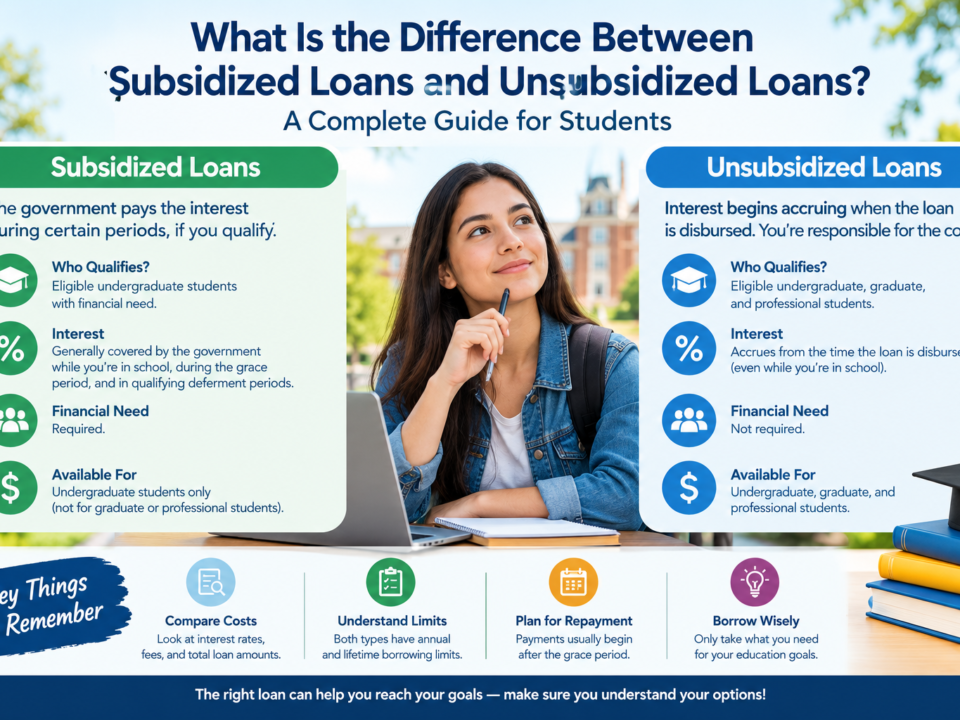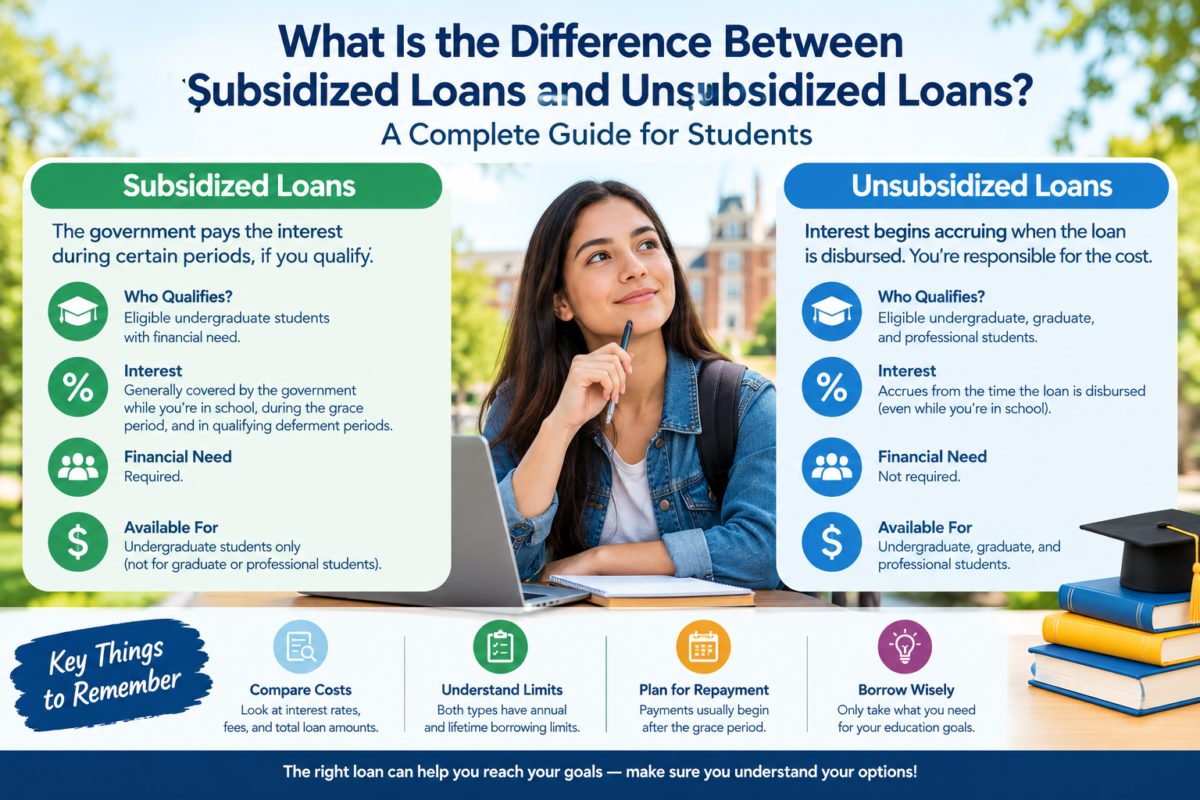
What Is the Difference Between Subsidized Loans and Unsubsidized Loans? A Complete Guide for Students
October 25, 2026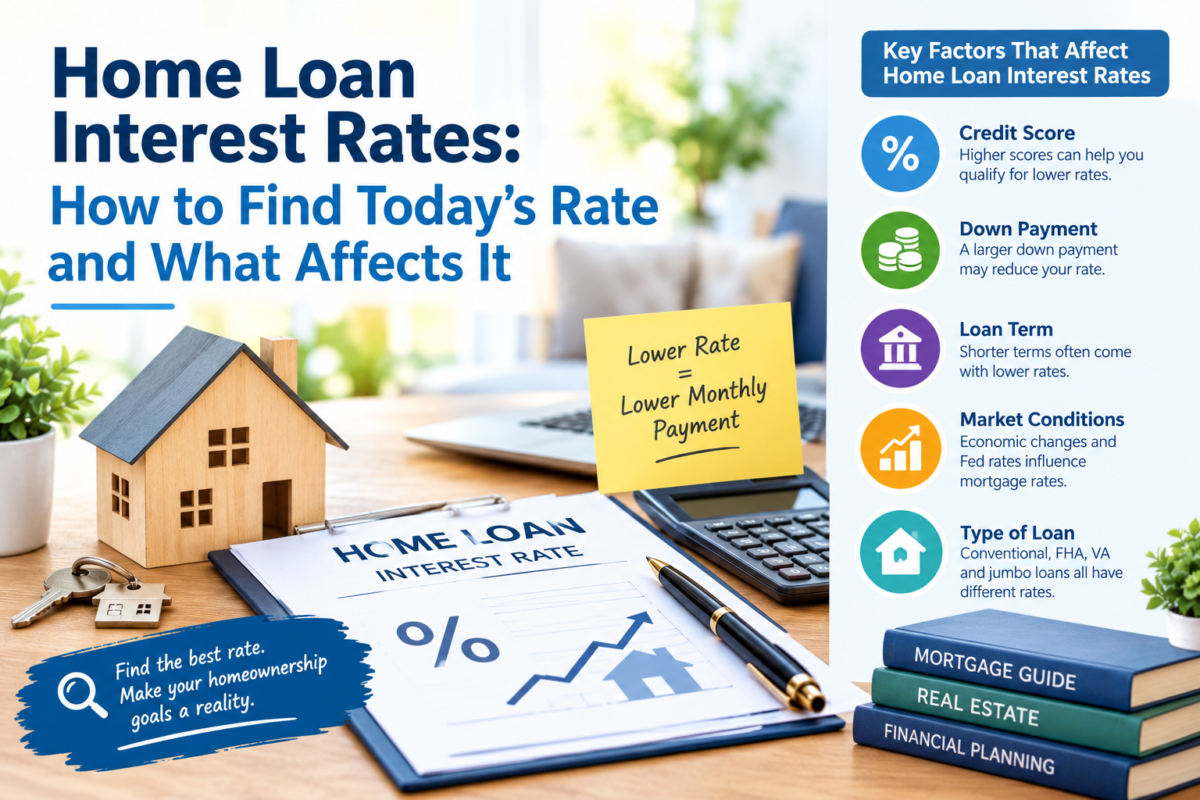
A home loan interest rate is the amount a lender charges for allowing a borrower to use money to purchase or refinance a home. It is generally expressed as a percentage of the outstanding loan balance and is applied over time. The rate affects how much interest accrues and, alongside the loan amount and repayment term, helps determine the regular payment. When people ask, “what is current interest rate for home loan,” there is no single answer that applies to every borrower. Rates change over time, and the offer available to one applicant may differ from another’s based on the loan and the borrower’s circumstances.
The interest rate should be distinguished from the annual percentage rate, or APR. The interest rate describes the cost of borrowing the principal, while APR is a broader measure that generally combines the rate with certain loan charges and fees. Because APR can reflect more of the cost of financing, it may help borrowers compare similar loan offers. However, APR is not a complete measure of every expense associated with owning a home, and the fees included in its calculation can vary. Comparing both figures, together with the loan term, payment schedule, and estimated closing costs, gives a clearer picture than relying on the interest rate alone.
Rates shown in advertisements are typically illustrative examples, not guaranteed offers. A lender may base an advertised rate on assumptions such as a particular loan type, repayment term, down payment, credit profile, property, or discount points. The example may also be available only to applicants who meet stated eligibility requirements. A borrower’s actual rate and APR can therefore be higher or lower after the lender reviews the application and verifies relevant details. Before choosing a loan, check the assumptions attached to any quoted rate and request a personalized estimate. This helps distinguish a promotional figure from the terms the lender may actually offer for the home purchase or refinance.
Asking “what is the current interest rate for a home loan?” does not produce one universal figure. Rates vary by country because central-bank policy, inflation, economic conditions, regulation, and mortgage-market structures differ. Even within one country, the answer depends on the product being compared. A fixed-rate mortgage may carry a different rate from a variable-rate loan, while introductory offers, tracker products, and government-backed loans can each follow separate pricing rules. Loan term and repayment structure may also affect the quoted rate.
The lender matters, too. Banks and other mortgage providers set their own offers based on competition, operating costs, risk assessments, and the cost of obtaining funds. Those costs can change as financial markets move, central-bank expectations shift, or lenders revise their business priorities. As a result, advertised rates are not permanent reference points: a lender may update its pricing at short notice, and information published in an article can become outdated soon after publication. When checking an offer, note its date and confirm the rate directly with the provider.
A published average or “from” rate should also be treated as a guide, not a promise. A starting rate may be available only to borrowers who meet specific conditions, such as having a larger deposit, choosing a particular term, or paying fees. The final offer for an individual borrower can differ according to credit history, income, debt commitments, property type, loan-to-value ratio, and the lender’s affordability assessment. These factors help explain why two applicants seeking similar loans may receive different quotes. For a useful comparison, review current offers for the same country, loan type, term, and fee structure, then seek a personalised quote. This gives a more reliable picture than relying on a single headline figure or asking for one rate that supposedly applies to every borrower.
To find out what is current interest rate for home loan offers today, compare several lenders on the same day. Check banks, credit unions, mortgage companies, and reputable rate-comparison websites rather than relying on a single advertised figure. Rates can change frequently, and different sources may update their information at different times. A same-day comparison gives you a more useful view of the market, though the rate you qualify for may differ from the rates displayed online.
Before comparing figures, inspect the details behind each rate. Confirm the location or market the information represents, its publication or update date, and the loan term, such as 15 or 30 years. Note whether the rate is fixed or adjustable, and check the assumptions used to calculate it. These may include the borrower’s credit profile, down payment, loan amount, occupancy, or discount points. Also compare the annual percentage rate (APR), when available, because it reflects certain loan costs in addition to the interest rate. A headline rate without these details may not be directly comparable with another lender’s offer.
Once you have a short list, contact lenders for personalized quotes based on the same loan amount, term, property location, and down payment. Ask each lender to explain any fees, points, rate-lock conditions, and the period for which the quote is valid. For a clearer comparison, request a written Loan Estimate after applying; this standardized document outlines the proposed rate, monthly payment, and closing costs. Review estimates from multiple lenders side by side, using the same assumptions and timing. Online averages can help you understand broad trends, but they are not a substitute for a quote tailored to your finances. Keeping the date and terms of each offer makes it easier to identify meaningful differences and decide which option merits further discussion.
When researching what is current interest rate for home loan applications, remember that advertised rates are only a starting point. A lender evaluates the full application before deciding what rate and loan terms to offer. Credit history and credit score are important because they help indicate how reliably a borrower has managed debt. A stronger record may qualify an applicant for more favorable pricing, while missed payments, high balances, or limited credit history can narrow available options.
Income and existing debts also affect a lender’s assessment. Lenders compare recurring obligations with income to judge whether monthly payments are manageable. Stable, well-documented earnings and a lower debt-to-income ratio can support an application, though employment type and income consistency may matter as well. The down payment on a purchase, or the borrower’s equity in a refinance, is another key consideration. More equity can reduce the lender’s exposure and may help the borrower avoid certain added costs, depending on the loan program.
Loan size, property type, occupancy, and repayment term can influence pricing too. A jumbo loan may be priced differently from a conforming loan, while a condominium, second home, or investment property may carry different requirements than a primary residence. Longer loan terms often have different rates from shorter terms, and the rate structure—fixed or adjustable—also changes how pricing is set. These details can affect both eligibility and the total cost of borrowing.
Pricing policies vary among lenders, so two institutions may offer different rates to the same borrower, even when they review similar information. Their funding costs, risk models, loan programs, and pricing adjustments are not identical. Comparing personalized estimates from multiple lenders can therefore reveal meaningful differences. A strong application—supported by solid credit, manageable debts, adequate equity, and complete documentation—can improve the range of available options, but it does not guarantee a particular rate. The final offer depends on the lender’s review and market conditions when the loan is locked.
When comparing offers, the answer to “what is current interest rate for home loan” depends partly on the loan structure and repayment term, not just on the lender’s advertised rate. Two borrowers may see different pricing because they choose different products, qualify for different programs, or accept different payment risks.
A fixed-rate mortgage keeps its interest rate unchanged for the agreed period, often the full repayment term. This makes principal-and-interest payments more predictable and protects borrowers from market-rate increases. The trade-off is that a fixed rate may initially be higher than the introductory rate on an adjustable product. A variable- or adjustable-rate loan can begin with a lower rate, but its rate may change according to a stated index and adjustment schedule. If rates rise, payments or the amount of interest paid can increase; borrowers should review caps, adjustment dates, and any limits on payment changes.
Repayment term also affects the offer and the total cost. A shorter term may carry a lower interest rate and reduces the time interest accrues, but higher monthly payments can strain a household budget. A longer term typically spreads repayment across more years, lowering required monthly payments while often increasing the total interest paid. The relationship between term and rate varies by market and lender, so compare the annual percentage rate, fees, payment amount, and total scheduled repayment—not the headline rate alone.
Loan programs can have distinct pricing and qualification rules. Conventional mortgages may require stronger credit or a larger down payment for the most favorable terms, while government-backed programs can offer different eligibility pathways, insurance or guarantee costs, and property requirements. Some regions also provide local assistance or specialized products for eligible buyers. Check whether fees are included in quoted costs and whether the rate depends on points, down payment, occupancy, or credit profile. Comparing written estimates for the same loan amount, term, and assumptions makes it easier to identify which offer fits both current finances and tolerance for future payment changes.
To compare home loan offers fairly, ask each lender to quote the same loan amount, property value, down payment, repayment term, and rate-lock period. These details affect pricing, so changing even one can make an offer appear cheaper without representing a genuine improvement. Request written estimates on the same day where possible, since market rates can move. If you are asking, “what is current interest rate for home loan,” remember that a headline rate is only a starting point: the rate available to you depends on the loan structure, your finances, and the lender’s pricing.
Compare both the interest rate and the annual percentage rate (APR). The interest rate determines the borrowing cost used to calculate principal and interest payments, while APR generally incorporates certain lender fees and other finance charges to show a broader annualized cost. Review each estimate line by line. Origination and underwriting charges, appraisal costs, and other lender fees can vary. Discount points are upfront payments intended to reduce the rate; lender credits may lower closing costs but can come with a higher rate. Check whether mortgage insurance applies and how much it may cost, particularly with a smaller down payment. Also distinguish lender-controlled charges from taxes, prepaid expenses, and third-party costs.
Do not choose an offer solely because it advertises the lowest rate or APR. Estimate the total cost over the period you realistically expect to keep the mortgage, taking account of upfront charges, monthly payments, mortgage insurance, and any costs associated with refinancing or selling. A lower rate purchased with points may pay off over a long holding period but cost more if you move soon. Conversely, a higher-rate offer with credits could suit someone prioritizing lower cash due at closing. Ask lenders to show the break-even point for points or credits, and compare scenarios using consistent assumptions. Confirm that the rate is locked, when the lock expires, and whether extension fees could apply. This approach helps identify the offer that best fits your timeline and budget, rather than simply the most appealing advertised figure.
A home loan interest rate affects the portion of each principal-and-interest payment that goes toward borrowing costs rather than reducing the balance. When the rate rises, the monthly payment on the same loan amount and term generally increases. A lower rate usually reduces that payment, although the result also depends on the loan’s structure, repayment period, and balance. This is why asking “what is current interest rate for home loan” is only a starting point: the rate available to one borrower may differ from another’s, and the payment impact depends on the amount financed and other loan details.
Interest also accumulates over time. With a fixed-rate loan, the scheduled principal-and-interest payment typically remains steady, but early payments devote a larger share to interest; as the balance falls, more goes toward principal. A higher rate can therefore increase both the monthly payment and the total interest paid over the full term. Extending a loan term may lower the required monthly payment, but it can mean paying interest for longer. Comparing rates is most useful when the loan amount, term, and repayment assumptions are held constant.
A mortgage calculator can help test several rates and loan amounts side by side. Enter an estimated balance, repayment term, and rate, then adjust one figure at a time to see how the principal-and-interest payment changes. Treat the results as estimates, not a lender’s offer, and use assumptions that reflect the loan you are considering. The calculator’s payment may not represent the full monthly housing cost. Property taxes, homeowners insurance, mortgage insurance where required, and homeowners association fees can add substantially to the amount due each month. Include these costs in a separate budget estimate, and confirm actual rates, fees, and payment terms with lenders before making a decision.
A quoted mortgage rate is not always guaranteed to remain available while a borrower completes an application. A rate lock is an agreement with a lender to hold a specific interest rate for a defined period, often while the loan is processed. The lock period and conditions vary, so borrowers should confirm when it begins and ends, what happens if closing is delayed, and whether an extension is available. Some lenders charge a fee for a lock or extension, while others include the cost in the loan pricing. Ask for the terms in writing before relying on a quoted rate.
Discount points are upfront charges paid to reduce a loan’s interest rate. One point typically costs 1% of the loan amount, though the rate reduction associated with a point varies by lender and market conditions. Paying points may lower monthly payments, but it increases the cash needed at closing. To assess whether the trade-off makes sense, compare the added upfront cost with the projected monthly savings and estimate how long it would take to recover the expense. Points may be more worthwhile for borrowers who expect to keep the mortgage beyond that break-even period; they may offer less value if a move or refinance is likely sooner.
When researching what is current interest rate for home loan offers, compare written estimates from several lenders for the same loan type, amount, down payment, and lock period. A rate alone does not show the full cost. Review origination charges, points, lender credits, mortgage insurance, and other fees, and compare the annual percentage rate alongside the quoted interest rate. Ensure that each offer uses comparable assumptions so differences are meaningful.
Ask each lender to explain unclear charges and the exact rate-lock terms, including any deadlines or fees. If one lender provides a stronger offer, share the competing written quote and ask whether the lender can improve its rate, reduce fees, or offer credits. Negotiation is not guaranteed to change the terms, but clear, comparable documentation can help borrowers evaluate options and make an informed decision without focusing solely on the headline rate.
Before comparing offers, confirm the country where you are borrowing and the loan program you qualify for. Mortgage products, government support, and rate terminology differ by market, so a figure advertised elsewhere may not apply to your situation. Check rates from several lenders on the same day, using the same loan amount, down payment, repayment term, and property details wherever possible. This creates a more useful comparison than relying on a headline rate or asking only, “what is current interest rate for home loan?” Rates can change frequently, even within a short period.
Next, request personalized written estimates from each lender. Review the annual percentage rate (APR), which can include certain fees as well as interest, and examine the total borrowing cost over the period you expect to keep the loan. Look for origination charges, points, mortgage insurance, valuation fees, and other costs that may affect the comparison. Ask whether the quoted rate depends on a specific credit profile, deposit, or discount points. Make sure you understand whether the rate is fixed for the full term or variable, how often a variable rate can change, and whether caps limit increases.
Before selecting an offer, review the rate-lock period, any fee to lock, and what happens if closing is delayed. Check for prepayment penalties or restrictions on making extra payments, since these terms may affect your flexibility. Then estimate the monthly payment alongside taxes, insurance, utilities, maintenance, and other household expenses. Choose a payment that remains manageable if costs rise or income changes, rather than stretching to qualify for the largest loan. Finally, verify every rate, fee, and loan condition directly with the lender before committing. Written figures are essential: advertised offers are not guarantees, and both rates and terms can change between an initial quote and closing.